
Most software follows instructions. Agentic AI makes decisions.
That's a short distinction with significant consequences for how you select a development partner. Building a product with an autonomous AI agent — one that plans steps, calls external tools, retrieves relevant context, and executes tasks without a human approving each move — is a different engineering problem from building an AI feature that generates text.
The companies on this list build agentic AI systems: multi-agent frameworks, LLM-orchestrated workflows, autonomous research and reasoning pipelines, and AI systems that take real-world actions. This is a young, fast-moving space. The firms worth your shortlist are the ones with production deployments, not just demo videos.
Key Takeaways
- Agentic AI development requires LLM orchestration expertise, not just prompt engineering — verify production deployment experience, not just prototypes.
- The biggest risk in agentic AI projects isn't building the agent — it's defining the agent's decision boundaries and failure modes before development begins.
- Multi-agent frameworks (AutoGen, CrewAI, LangGraph) have matured significantly in 2025–2026; verify that your partner works with current frameworks, not legacy chatbot approaches rebranded as agents.
- Evaluation, observability, and guardrails are non-negotiable in production agentic systems — ask any partner how they handle agent failures and unexpected tool calls.
What Agentic AI Development Means
An agentic AI system is not a chatbot. It's not a retrieval-augmented search tool. It's not a copilot that suggests actions for a human to approve.
An agentic AI system plans a sequence of steps to accomplish a goal, executes those steps autonomously, uses external tools (APIs, databases, web search, file systems), adapts based on intermediate results, and handles errors without stopping to ask a human what to do next.
That's a meaningfully different technical problem from building a standard LLM application. It requires work in several areas that most AI development teams don't prioritise: agent architecture design, tool definition and safety boundaries, evaluation frameworks to catch agent failures, observability to understand what the agent actually did and why, and orchestration logic to coordinate multiple agents working in parallel on sub-tasks.
McKinsey research indicates that enterprises moving beyond standalone AI features toward autonomous workflow execution are seeing the largest productivity gains from AI investment. The companies building those systems are doing something structurally more complex than prompt engineering.
An agentic AI development company worth working with should be able to explain their approach to agent failure handling before they explain their LLM vendor preference.
How We Evaluated These Agentic AI Development Companies
This list reflects editorial research based on publicly verifiable criteria — not vendor submissions or paid placement.
- Production deployment record: Evidence of agentic AI systems shipped to production — not just prototypes or internal tools.
- LLM orchestration depth: Demonstrated capability with modern agentic frameworks (LangChain, LangGraph, AutoGen, CrewAI) and multi-agent system design.
- RAG and knowledge retrieval capability: Track record implementing Retrieval-Augmented Generation architectures that provide agents with reliable context.
- Enterprise integration experience: Ability to connect agentic AI systems to existing enterprise data, APIs, and workflows — not just standalone AI apps.
- Evaluation and observability practice: Evidence that the firm builds evaluation frameworks and monitoring into agentic deployments, not as an afterthought.
- Client feedback: Clutch and GoodFirms ratings; quality of reviews relevant to AI-specific engagements.
Companies at a Glance
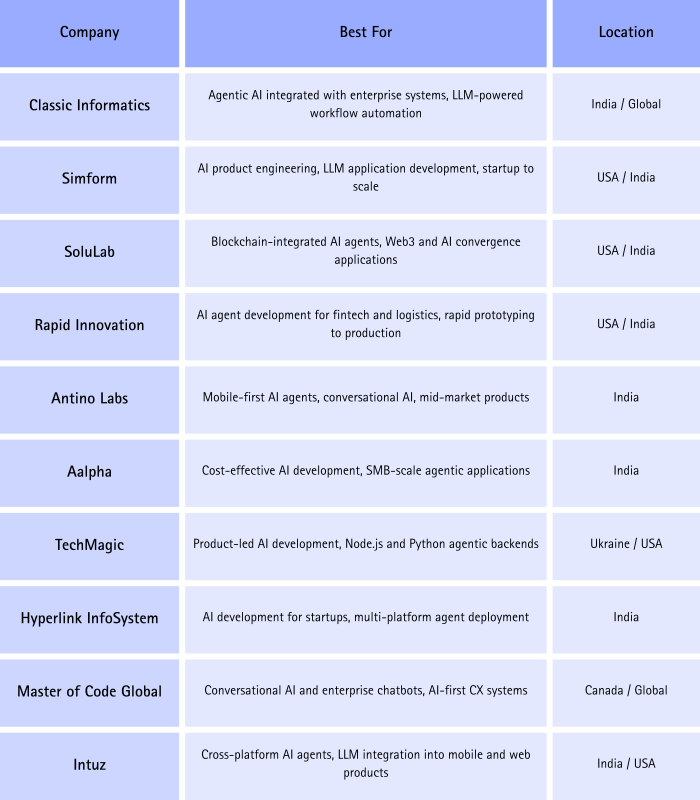
10 Agentic AI Development Companies Worth Evaluating
1. Classic Informatics
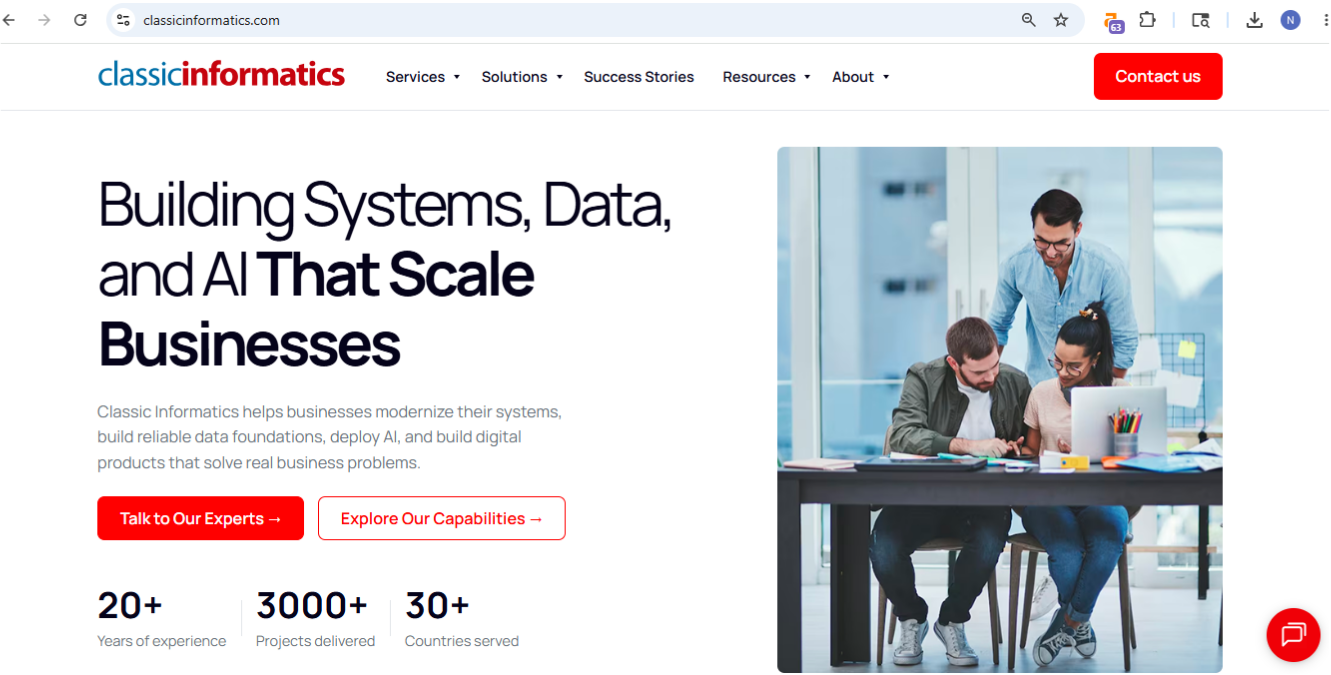
Classic Informatics builds agentic AI systems that connect to the data and workflows your business already runs on — not isolated AI applications that exist alongside your existing infrastructure, but agents that reason over your actual business data, call your actual APIs, and produce outputs that feed directly into your operational systems.
With 23+ years of product engineering across healthcare, manufacturing, fintech, and SaaS, Classic Informatics brings the application engineering depth that agentic AI systems require: AI agent development integrated with enterprise backend systems, real-time data pipelines, and the security and access controls that production deployments in regulated industries demand. The team builds multi-agent orchestration alongside the evaluation and observability layer that makes those agents trustworthy in production.
- Multi-agent system design and LLM orchestration
- RAG architecture and enterprise knowledge retrieval
- LangChain, LangGraph, and AutoGen framework development
- AI agent integration with ERP, CRM, and enterprise APIs
- Evaluation frameworks and agent observability tooling
- Agentic AI for document processing, workflow automation, and decision support
If you're building an agentic system that needs to work with real enterprise data and integrate with existing business workflows — not a demo that doesn't survive contact with production — Classic Informatics has the engineering depth to build it correctly.
2. Simform
Simform has built out a serious AI engineering practice alongside their established cloud and product development work. Their agentic AI capability spans LLM application development, multi-agent orchestration, and AI feature integration into existing products — a breadth that works for companies that need AI woven into an existing platform rather than built as a standalone tool.
US and India-based, Simform serves startups scaling AI capabilities and mid-market teams adding autonomous workflows to existing product lines.
- LLM application development and orchestration
- Multi-agent system design and implementation
- RAG pipeline development and vector database integration
- AI feature integration into existing web and mobile products
- AWS AI services and cloud-native AI deployment
- AI evaluation, testing, and monitoring frameworks
Simform is strongest when the agentic AI work sits alongside existing cloud and product engineering. Teams looking for a pure-play AI agent specialist with narrow but deep expertise in autonomous reasoning systems may find more focused options on this list.
3. SoluLab
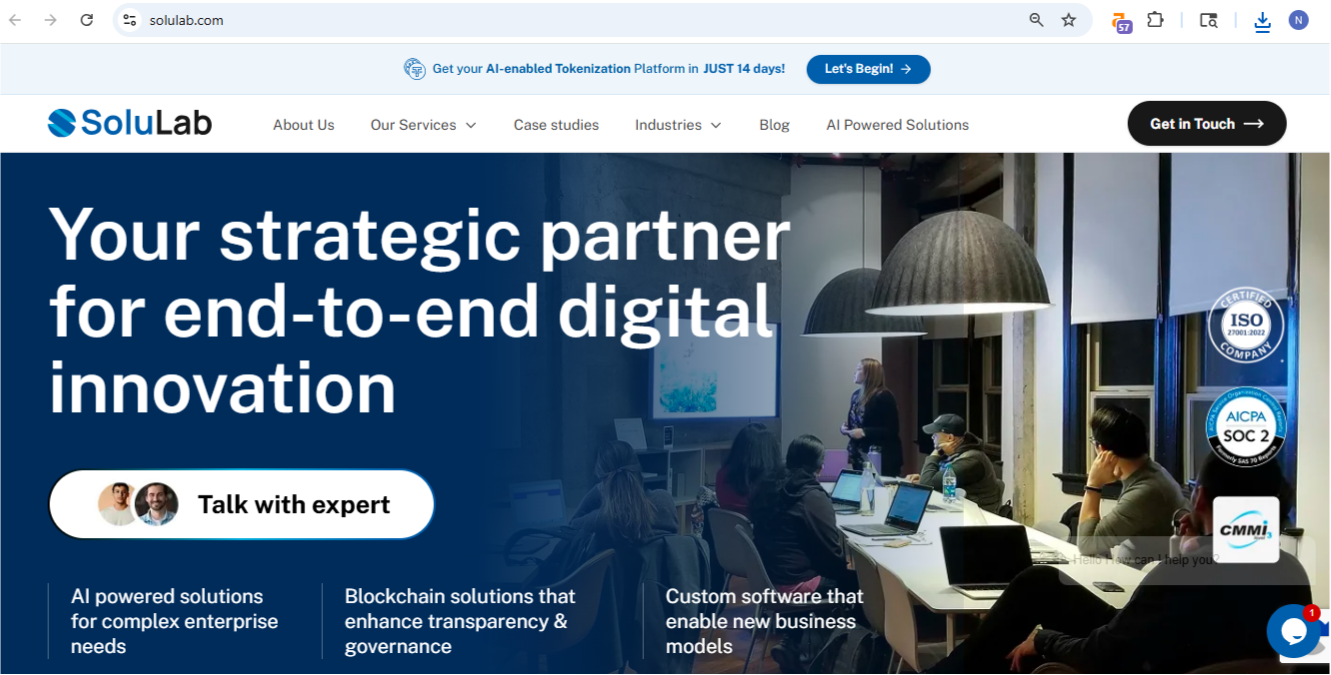
SoluLab is a US and India-based firm with a documented track record in AI and blockchain development — a combination that positions them specifically for organisations building agentic AI systems that operate on decentralised infrastructure or require on-chain agent actions. Their AI agent practice includes LLM integration, autonomous workflow development, and AI-powered smart contract interaction.
They work with startups and scale-ups primarily, and their Clutch reviews reflect consistent delivery in the AI and blockchain development categories.
- AI agent development and LLM orchestration
- Blockchain-integrated AI applications
- Conversational AI and NLP system development
- Generative AI integration for enterprise products
- Smart contract and Web3 AI agent development
- Computer vision and AI model integration
SoluLab's strongest differentiation is at the intersection of AI and blockchain. For agentic AI applications with no blockchain component, other firms on this list may offer more focused AI engineering depth without the blockchain overlay.
4. Rapid Innovation
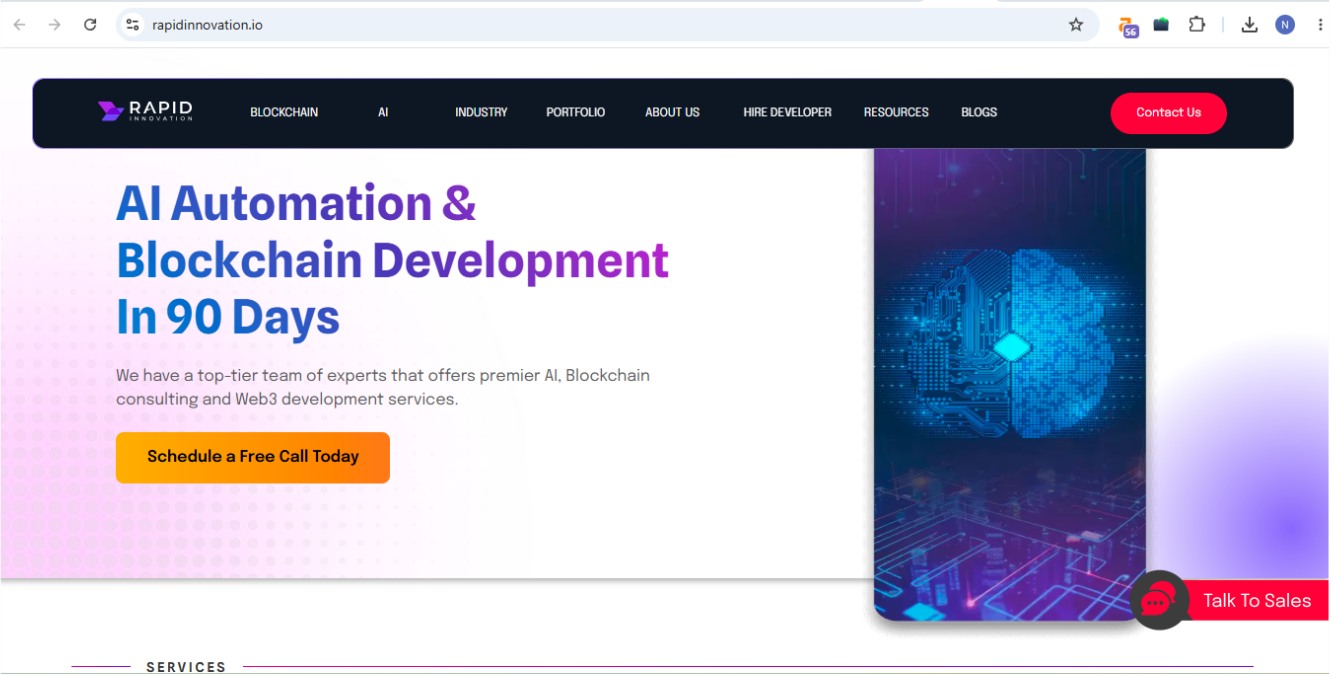
Rapid Innovation is an AI development firm with delivery experience in fintech, logistics, and supply chain agentic applications — domains where autonomous decision-making carries real operational stakes. Their focus is taking agentic AI systems from prototype to production, which they position as their primary differentiator from firms that deliver impressive demos but stall at enterprise deployment.
US and India-based, they've built AI agent systems for document processing, financial data analysis, and logistics route optimisation.
- AI agent development for fintech and logistics
- LLM fine-tuning and custom model development
- Autonomous workflow and process automation
- RAG pipeline and enterprise knowledge base integration
- AI agent observability and evaluation frameworks
- Generative AI product development and API integration
Rapid Innovation's emphasis on production readiness is meaningful in a market where many agentic AI projects don't survive the transition from pilot to deployment. Teams in heavily regulated sectors should verify their compliance and security architecture practices specifically.
5. Antino Labs
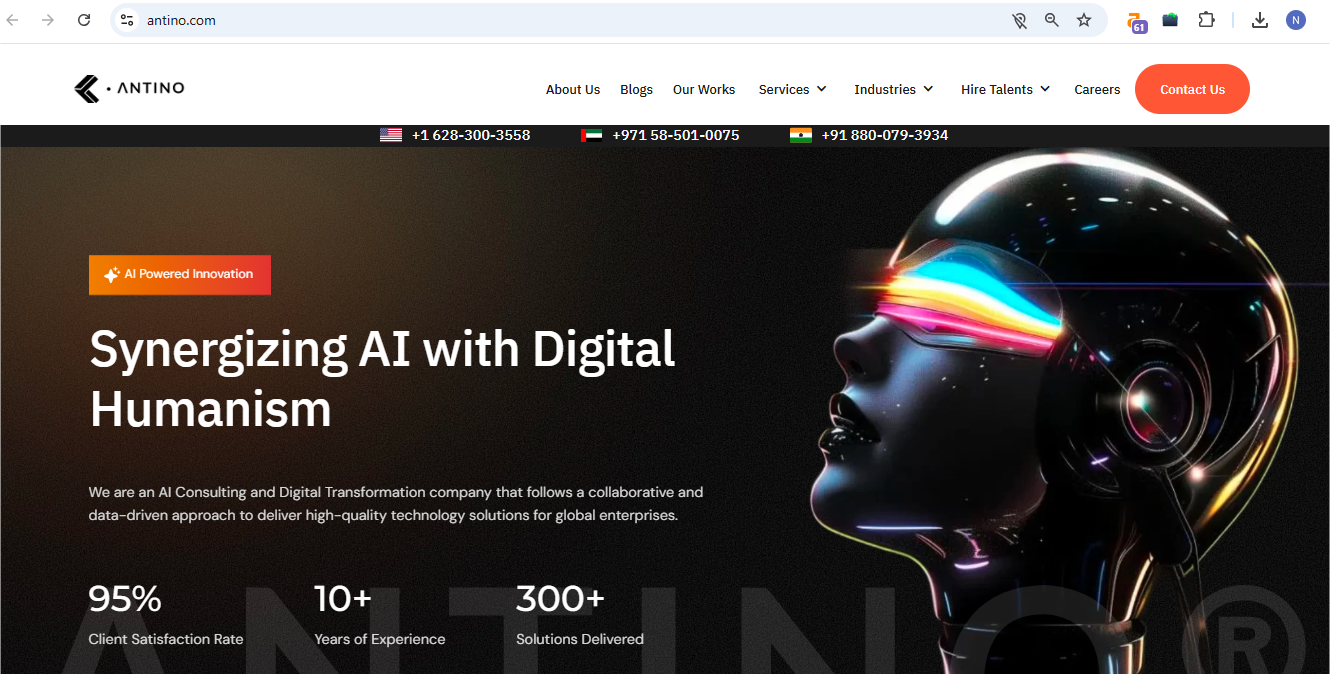
Antino Labs is an India-based product firm with an AI development practice focused on mobile-first agentic applications and conversational AI systems. For companies building AI agents that surface through mobile interfaces — voice-enabled agents, mobile-first AI workflows, conversational assistants integrated into apps — Antino Labs' combined mobile and AI capability is directly relevant.
Their Clutch reviews span healthcare, retail, and fintech clients, with AI development as a growing practice area.
- Conversational AI and chatbot development
- Mobile-first AI agent integration
- LLM API integration (OpenAI, Anthropic, Google)
- Natural language processing and intent recognition
- AI-powered mobile app feature development
- Custom AI model integration and deployment
Antino Labs is a strong choice for mobile-first AI agent applications. For complex multi-agent enterprise systems with significant backend integration requirements, firms with deeper enterprise AI engineering practices may be a better fit.
6. Aalpha
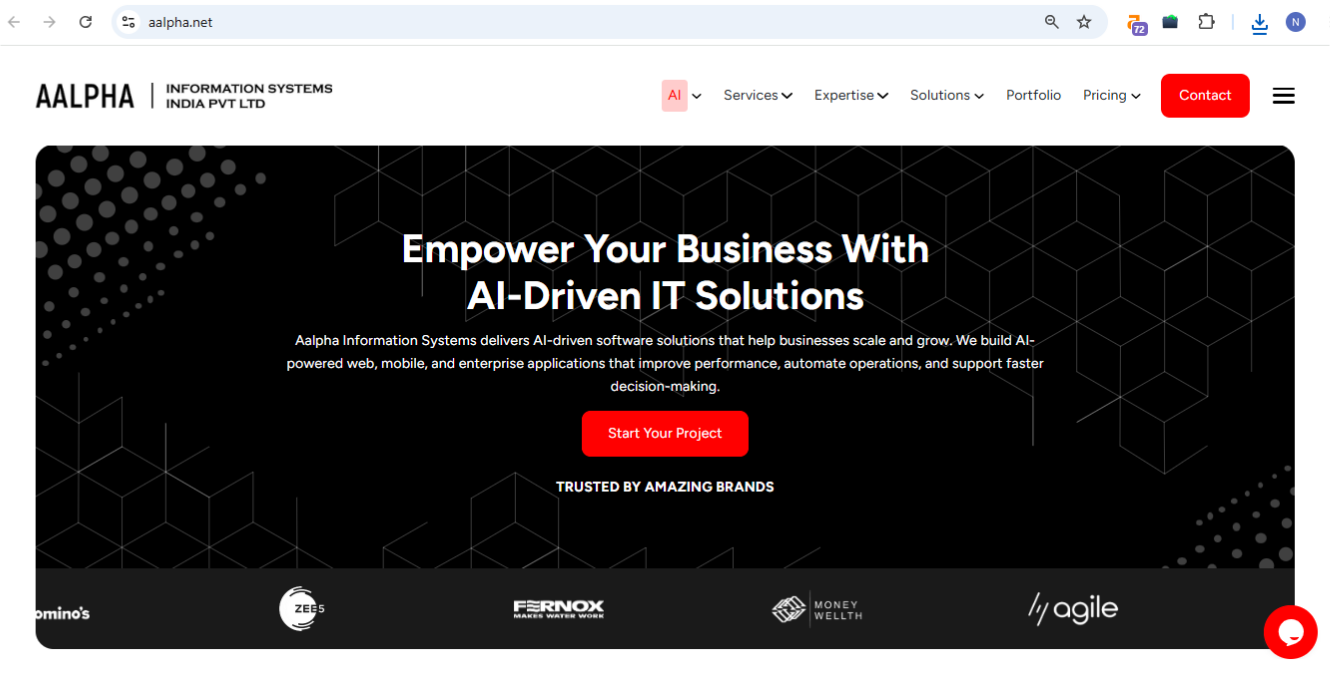
Aalpha is an India-based software firm serving SMBs and scale-ups with AI development work that includes LLM integration, chatbot development, and agentic workflow automation. Their positioning is practical and accessible — they deliver AI capability at price points that smaller organisations can work with, without the enterprise overhead of larger firms.
Their Clutch profile reflects delivery across startup and SMB clients in North America and Europe.
- LLM integration and GPT-based application development
- AI chatbot and conversational agent development
- Workflow automation with AI decision layers
- NLP and text processing application development
- AI feature integration into existing web and mobile products
- Custom AI development for specific business process use cases
Aalpha is a practical choice for SMBs building their first AI agent application with a contained scope. Complex multi-agent systems, enterprise integrations, and production environments with strict reliability requirements are better served by firms with a larger, more specialised AI engineering team.
7. TechMagic
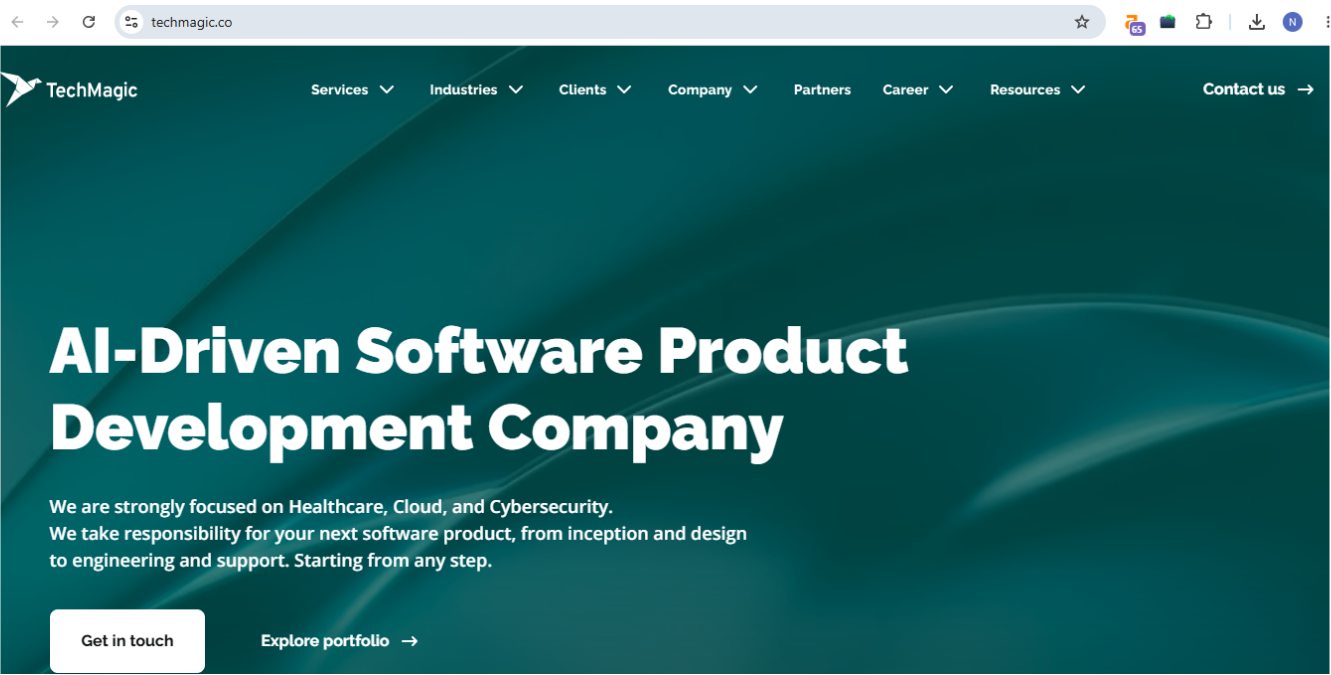
TechMagic is a Ukraine and US-based product firm with a growing AI engineering practice built primarily on Node.js and Python backends. Their strength is product-led AI development — AI features and agent capabilities built into products from the beginning of the design process, not bolted on after the core product is shipped.
They serve early-stage and growth-stage technology companies primarily, and their case studies reflect AI development as an integrated part of product engineering rather than a separate AI track.
- Node.js and Python-based AI backend development
- LLM integration and API orchestration
- AI-powered product feature development
- RAG and knowledge retrieval system implementation
- AI workflow automation and process integration
- Cloud-native deployment for AI applications (AWS, GCP)
TechMagic's product-engineering orientation is an asset for companies building AI-native products. For organisations adding agentic AI capabilities to existing enterprise systems with significant legacy integration requirements, firms with broader enterprise engineering experience are a stronger match.
8. Hyperlink InfoSystem
Hyperlink InfoSystem is a large India-based software development firm with a broad technology practice that includes AI development as an active service line. They work with startups across mobile, web, and AI application development, and their Clutch review volume is among the highest in their market segment — providing a large sample of delivery experience to evaluate.
They serve clients across North America, Europe, and APAC in retail, education, healthcare, and entertainment sectors.
- AI application development and LLM integration
- Chatbot and virtual assistant development
- Machine learning model integration
- Computer vision and image recognition development
- AI feature development for mobile and web apps
- Generative AI application development
Hyperlink InfoSystem's broad practice covers AI development across a wide range of use cases. For deep, specialised agentic AI system development — multi-agent orchestration, complex reasoning pipelines, enterprise-grade observability — firms with a narrower and deeper AI engineering focus may deliver stronger technical outcomes.
9. Master of Code Global
Master of Code Global is a Canadian conversational AI firm with a specific strength in enterprise chatbot and AI assistant deployments for customer experience use cases. If your agentic AI application is primarily a customer-facing AI system — an autonomous support agent, a guided sales agent, a conversational service automation tool — Master of Code's experience in those deployments is more relevant than a generalist AI development firm.
They have documented deployments with enterprise clients in retail, financial services, and telecommunications.
- Enterprise conversational AI and chatbot development
- Voicebot and voice agent platform development
- AI-powered customer service automation
- LLM integration for enterprise customer experience
- Multi-channel AI deployment (web, mobile, voice)
- AI agent analytics and performance monitoring
Master of Code Global is strongest in customer-facing conversational AI contexts. For agentic AI systems focused on internal workflow automation, data analysis, or back-office processing, their CX-first orientation may be a narrower fit than the project requires.
10. Intuz
Intuz is an India and US-based technology firm with an AI development practice that spans mobile, web, and cross-platform applications. They work with companies integrating LLM capabilities into existing products — adding AI agents, automating document workflows, and building AI-assisted features that connect to existing backend systems.
Their Clutch reviews reflect delivery across North American and European clients in healthcare, retail, and SaaS sectors.
- LLM integration and AI feature development
- Cross-platform AI agent deployment (iOS, Android, web)
- Document intelligence and AI processing pipeline development
- Chatbot and conversational AI integration
- AI-powered analytics and reporting feature development
- Backend API development for AI-connected applications
Intuz is a practical choice for companies adding AI agent capabilities to existing cross-platform products. For dedicated agentic AI platform development with complex multi-agent orchestration and enterprise-grade reliability requirements, a more specialised AI engineering firm is the stronger option.
How to Choose the Right Agentic AI Development Partner
Agentic AI is early enough that many firms are still figuring it out. Here's how to tell the difference between genuine capability and well-packaged aspiration.
- Ask to see production deployments, not demos: Demos of agentic AI systems are easy to produce and almost impossible to evaluate accurately. Ask specifically for case studies of systems running in production, how long they've been running, and what monitoring is in place.
- Define the agent's decision boundaries upfront: Before any code is written, you should have a clear answer to: what actions can the agent take autonomously, what requires human confirmation, and what happens when the agent encounters an unexpected situation? A partner who can't help you answer these questions before scoping isn't ready to build production agentic systems.
- Evaluate their RAG and knowledge retrieval approach: Most useful agentic AI systems need access to current, domain-specific information. Ask how the firm handles retrieval architecture, vector database selection, and context window management.
- Ask about evaluation frameworks: Production agentic AI systems need automated evaluation — tests that verify the agent's outputs meet quality thresholds. If a firm hasn't thought about evaluation methodology, they're building systems they can't measure.
- Verify integration capability: An AI agent that can't connect to your existing systems isn't adding value. Assess the firm's backend integration experience — APIs, databases, enterprise systems — not just their LLM framework knowledge.
- Clarify the observability stack: What happens when the agent takes an unexpected action? Who gets alerted? How is it logged and reviewed? Observability is what makes agentic systems trustworthy in production.
Let's Wrap This Up!
Agentic AI development is not one thing. Master of Code Global builds enterprise customer experience agents. SoluLab sits at the AI-blockchain intersection. Rapid Innovation leads with production-readiness for fintech and logistics. TechMagic is product-engineering-first. Each of them is the right answer in a specific context.
What none of them can do is make vague requirements into a reliable agent. The quality of your brief — what decisions the agent makes, what systems it connects to, what failure looks like, and how you'll measure success — determines more of the outcome than which firm builds it.
If you're building an agentic AI system that connects to your enterprise data, integrates with your existing workflows, and needs to perform reliably in production — not just in a demo — Classic Informatics can scope and build that with you. Talk to our team when you're ready.
FAQS

Frequently Asked Questions
Agentic AI development is the process of building AI systems that can plan sequences of steps, use external tools and APIs, retrieve relevant information, and execute tasks autonomously without human approval at each step. Unlike standard AI features that respond to single inputs, agentic systems maintain goals across multiple actions and adapt based on intermediate results — making them significantly more complex to build and evaluate correctly.