Your platform isn't old. It's expensive.
That's the honest framing most mid-market CTOs land on eventually — usually after the third consecutive sprint where half the team's velocity went to working around the legacy monolith instead of shipping new features. The system isn't broken. It's just costing you more than it should, in ways that don't show up cleanly on a balance sheet.
Platform modernization for mid-market companies is a different challenge from what large enterprises face. You have the same technical debt problems — monolithic architectures, tightly coupled systems, aging APIs — but with smaller budgets, smaller teams, and less margin for a modernization that drags on for two years. The right partner understands that.
This list covers ten platform modernization companies that work at the mid-market scale — with the delivery models, engagement sizes, and technical depth that fit where you actually are.
Key Takeaways
- Platform modernization for mid-market companies works best as incremental delivery — not big-bang rewrites that carry outsized execution risk.
- Technical debt isn't just a performance problem; it's a business velocity problem that compounds with every new feature sprint.
- The strangler fig pattern and phased migration approaches are standard practice among credible modernization partners — validate this before engaging.
- Classic Informatics leads this list for its incremental modernization track record and its fit for mid-market delivery constraints.
- Cloud migration services and microservices architecture expertise are table stakes — assess depth of experience, not just claimed capability.
What Mid-market Companies Get Wrong About Platform Modernization
The most common mistake is treating platform modernization as a binary choice: full rewrite or do nothing.
It's almost never that. Legacy modernization done well is incremental. It's a series of targeted decisions — which services to extract first, which interfaces to modernize in place, which integrations to replace versus wrap — made in the right sequence. The strangler fig pattern exists precisely because big-bang rewrites fail at a higher rate than incremental approaches.
The second mistake is scoping to the wrong partner. Mid-market companies often get quoted by large enterprise consulting firms whose minimum engagement size exceeds the entire annual IT budget. Or they try a small generalist shop that doesn't have the depth to handle the legacy architecture complexity.
The companies on this list sit in the right range. They have the technical depth for complex modernization work. They have engagement models that fit mid-market budgets. And they've done this before — in production, with real teams, on real legacy systems.
How We Evaluated These Platform Modernization Companies
We assessed each firm against criteria specific to mid-market platform modernization:
-
Incremental delivery approach: Evidence of phased modernization over big-bang rewrites — including strangler fig, parallel running, and module-by-module extraction.
-
Technical debt assessment capability: Ability to evaluate existing architecture and quantify what modernization will cost and recover — not just a "we'll figure it out" approach.
-
Cloud migration and cloud-native depth: Hands-on experience with AWS, Azure, or GCP migration — not theoretical cloud strategy.
-
Microservices and containerization competence: Real delivery experience with service decomposition, Kubernetes, and containerized deployments.
-
Mid-market engagement model: Pricing, team size, and communication structures that fit mid-market companies — not enterprise-scaled overhead.
-
Post-modernization support: Capacity to continue alongside your team after go-live, not just hand off and leave.
10 Platform Modernization Companies Worth Evaluating
1. Classic Informatics
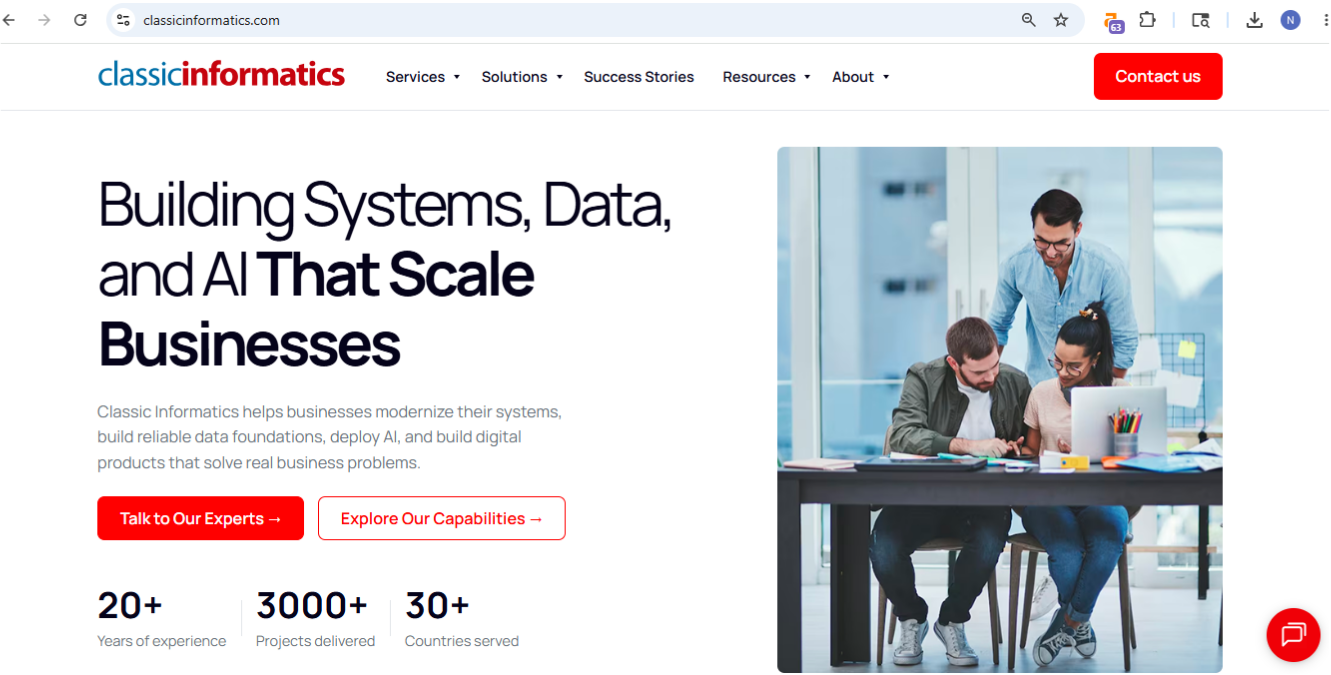
Classic Informatics has spent over two decades helping mid-market companies modernize platforms that were built for a different era — monoliths that made sense in 2010 but now block every new feature request, every integration, and every attempt to add AI capabilities to the stack.
The firm's approach to platform modernization starts with the architecture assessment, not the migration plan. Before writing a line of new code, Classic Informatics maps the existing system — identifying what can be extracted cleanly, what needs to be wrapped, and what should be replaced outright. This prevents the scope creep and cost overruns that define too many modernization programs.
What sets Classic Informatics apart from the generalist firms on this list is the depth in legacy-to-cloud migration combined with a delivery model built for mid-market constraints. There's no 12-month strategy phase before anyone touches code. Modernization is phased, sprint-by-sprint, with each phase delivering working software — not just documentation.
-
Legacy monolith assessment and decomposition planning
-
Strangler fig pattern and incremental microservices migration
-
Legacy application modernization and API layer replacement
-
Cloud migration (AWS, Azure, GCP)
-
DevOps, CI/CD pipeline implementation
-
Technical debt quantification and remediation planning
For mid-market companies managing cloud migration services alongside active product roadmaps, Classic Informatics can structure modernization to run in parallel with your current development — so the roadmap doesn't stop while the architecture improves. Explore platform modernization services to see how the approach maps to your environment.
2. Intellectsoft
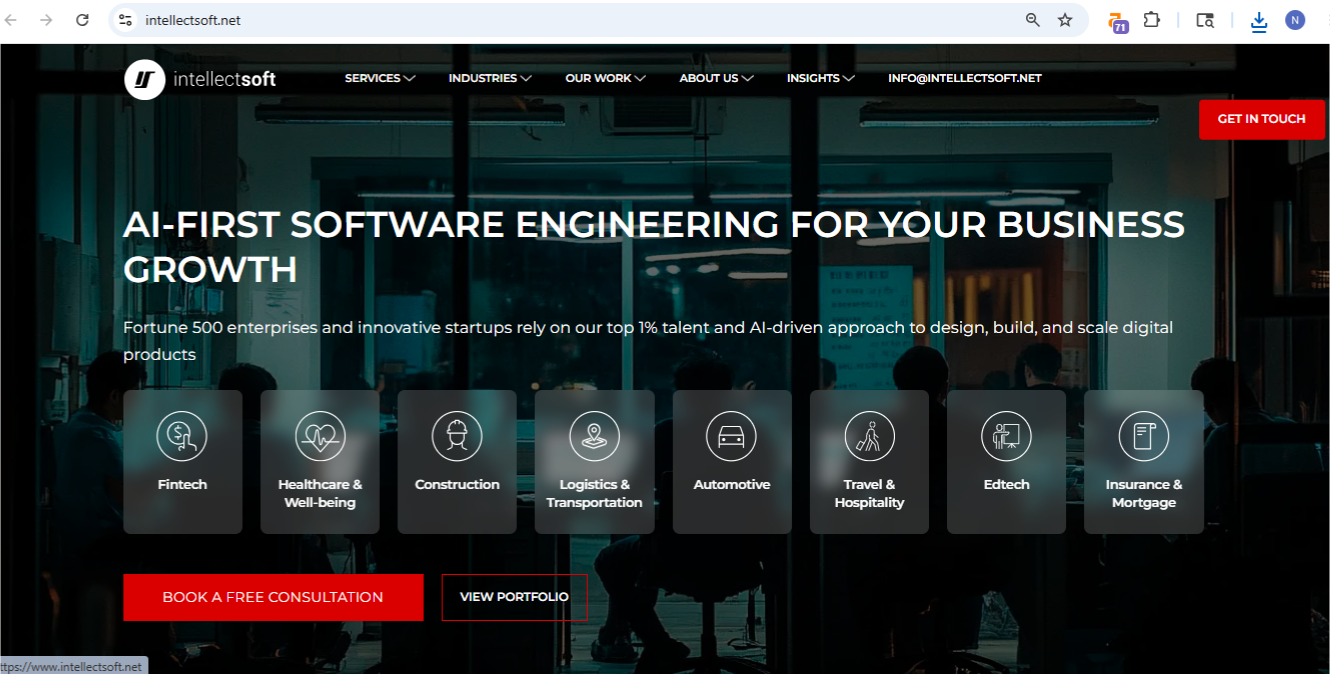
Intellectsoft works across cloud-native development and application modernization for mid-market and enterprise clients. Their modernization practice covers legacy system assessment, cloud migration, and re-platforming — delivered through teams that have direct engineering experience rather than consulting-first project structures.
What makes Intellectsoft worth evaluating for mid-market modernization is their emphasis on delivery speed. Their engagement model is built for organizations that can't afford a slow crawl — they work in defined sprints with clear milestones, which fits mid-market timelines better than open-ended consulting engagements.
-
Cloud-native application development and re-platforming
-
Legacy system modernization and API replacement
-
Microservices architecture and containerization
-
Mobile and web platform modernization
-
DevOps and CI/CD implementation
Intellectsoft is a strong mid-market option for companies looking to move fast on cloud migration and re-platforming. For organizations with very complex legacy middleware or mainframe dependencies, validate their depth in those specific legacy environments.
3. Fingent
Fingent focuses on software modernization and cloud migration for mid-market companies across healthcare, financial services, retail, and manufacturing. Their projects tend toward custom development combined with modernization — rebuilding specific platform components rather than wholesale replacements.
Their strength is in understanding what's worth keeping versus what should be rebuilt — a judgment call that generalist shops often get wrong by defaulting to full rewrites.
-
Custom software modernization and re-platforming
-
Cloud migration (AWS, Azure)
-
ERP and CRM modernization
-
API development and integration layer modernization
-
Legacy mobile application modernization
Fingent is a good fit for mid-market companies in regulated industries or with complex legacy integrations. For larger-scale microservices decomposition programs, validate the depth of their containerization experience.
4. Brainvire
Brainvire is an India-based technology firm with a strong application modernization practice. Their re-platforming work covers e-commerce, enterprise software, and SaaS modernization — with particular depth in migrating legacy .NET and PHP systems to modern cloud-native stacks.
Their team size and India-based delivery model give mid-market companies access to engineering depth without enterprise consulting overhead.
-
App re-platforming (.NET, PHP, Java legacy modernization)
-
E-commerce platform modernization and migration
-
Cloud migration and infrastructure modernization
-
Mobile app modernization
-
API integration and microservices adoption
Brainvire works best for mid-market companies running legacy e-commerce or enterprise software stacks who need a technology-focused partner. For organizations with deep infrastructure complexity or mainframe environments, verify their specific experience in those areas.
5. Iflexion
Iflexion is a Clutch-listed software development and modernization firm with a track record in re-platforming legacy enterprise applications. Their work spans desktop-to-web migrations, API modernization, and cloud transitions — with delivery teams based in Eastern Europe.
Their project documentation and structured delivery approach appeal to mid-market companies that need visibility into progress without building out a dedicated vendor management function.
-
Legacy desktop-to-web and desktop-to-cloud migration
-
Enterprise software re-platforming
-
API modernization and integration
-
Cloud-native application development
-
Legacy database migration and modernization
Iflexion is a solid choice for mid-market companies with desktop legacy applications or specific re-platforming needs. For high-complexity distributed system modernization, compare their case study depth carefully.
6. Prolifics
Prolifics has built its modernization practice around IBM middleware and enterprise application modernization — making them particularly valuable for mid-market companies running IBM WebSphere, MQ, or legacy J2EE environments that need modernization pathways.
Their US-based presence with a structured mid-market delivery model means direct engineering access without large consulting firm overhead.
-
IBM middleware modernization (WebSphere, MQ, DataPower)
-
Java and J2EE application modernization
-
Cloud migration for enterprise middleware environments
-
Application integration and API layer modernization
-
DevOps and CI/CD for modernized platforms
Prolifics is the strongest option on this list for IBM middleware environments specifically. For non-IBM tech stacks, other firms on this list carry broader coverage.
7. Robosoft Technologies
Robosoft Technologies is an India-based digital product engineering firm with a modernization practice focused on mobile and web platform re-platforming. Their work is particularly strong in consumer-facing platform modernization — upgrading legacy mobile and web experiences while maintaining continuity.
-
Mobile platform modernization and re-platforming
-
Web application modernization
-
Cloud migration for consumer-facing platforms
-
Cross-platform development and legacy mobile migration
-
Digital product engineering for modernized platforms
Robosoft is well-suited for mid-market companies whose modernization priority is the customer-facing platform layer. For back-end system and infrastructure modernization, combine their capabilities with a partner that has deeper server-side depth.
8. Synoptek
Synoptek is a US-based managed IT services and application modernization firm with a focus on mid-market companies. Their model combines cloud migration with managed services — a useful combination for organizations that want modernization support to continue after the initial migration.
-
Cloud migration and cloud infrastructure management
-
Application modernization and managed application services
-
IT managed services and ongoing platform support
-
Legacy system integration and modernization planning
-
Microsoft Azure and AWS migration
Synoptek is a strong fit for mid-market companies that want ongoing managed support alongside their modernization program. For organizations that prefer a pure development engagement without managed services bundled in, other firms may be a cleaner fit.
9. Openwave Computing
Openwave Computing offers cloud migration and platform modernization services with a delivery model suited to mid-market budgets. Their work spans cloud infrastructure setup, application re-platforming, and DevOps implementation — with teams based in India.
-
Cloud migration (AWS, Azure, GCP)
-
Application modernization and re-platforming
-
DevOps implementation and CI/CD pipeline setup
-
Microservices adoption and containerization
-
Legacy system integration and API development
Openwave Computing is a solid option for mid-market companies at the earlier stages of their cloud migration journey. For complex legacy environments with significant data migration requirements, validate their depth with a specific reference check.
10. Orion Innovation
Orion Innovation is a digital engineering and modernization firm with global delivery capabilities. Their modernization work extends across traditional enterprise software, embedded systems, and IoT platform modernization — making them a useful option for mid-market manufacturers and technology companies with hardware-adjacent software.
-
Digital engineering and platform modernization
-
Embedded systems and IoT platform modernization
-
Cloud migration and DevOps transformation
-
Legacy application modernization
-
Product engineering for modernized platforms
Orion Innovation is particularly relevant for mid-market technology or manufacturing companies with hardware-adjacent platform modernization needs. For pure software and SaaS platform modernization, other firms on this list have deeper specialization.
How to Choose the Right Platform Modernization Partner
Picking the right application modernization partner for a mid-market company comes down to fit across six dimensions:
-
Incremental delivery model: Ask explicitly how they handle risk during modernization. If the answer isn't "phased migration with production validation at each step," keep asking.
-
Technical debt assessment before pricing: A credible modernization partner assesses your existing architecture before estimating cost. Fixed-price quotes on complex legacy systems without a full assessment are a risk signal.
-
Cloud migration experience with your cloud: Verify hands-on delivery experience on your specific cloud provider (AWS, Azure, GCP) — not just claimed familiarity.
-
Microservices decomposition depth: Ask for specific examples of service extraction from monoliths. The strangler fig pattern, bounded contexts, and event-driven architecture should be natural parts of their vocabulary.
-
Engagement model and communication fit: Mid-market teams are lean. You need a partner with direct engineering access, clear weekly communication, and the ability to work with your internal team — not just alongside it.
-
Post-modernization continuity: What happens after go-live? Understand what support looks like in the six months following initial delivery — this is where many modernization programs lose momentum.
Let's Wrap This Up!
Mid-market companies are in a harder position than most people acknowledge when it comes to platform modernization. You have the same legacy debt as large enterprises. You have fewer engineers to manage the transition. And you're expected to keep shipping product while the architecture changes underneath you.
The companies on this list understand that constraint. Some — like Prolifics and Synoptek — bring strong service wrappers around their engineering. Others — like Intellectsoft, Fingent, and Brainvire — are built more as direct engineering partners. The right pick depends on how much internal capacity you have to manage the engagement versus how much you need a fully-managed delivery.
Platform modernization isn't a destination. It's a phase of your platform's life. The companies that handle it well don't just migrate and leave — they leave your team in a better position to keep improving.
If you're dealing with technical debt that's slowing your roadmap, a monolith that blocks every new integration, or legacy application modernization decisions you've been putting off — Classic Informatics can help you scope the right approach. We'll tell you what order to do things, what to modernize versus replace, and what the real timeline looks like. Talk to our team whenever you're ready.
FAQS

Frequently Asked Questions
Platform modernization is the process of updating legacy software systems — replacing outdated architectures, migrating to cloud-native infrastructure, and removing technical debt that slows development. Mid-market companies need it when legacy systems begin blocking new features, integrations, or data capabilities at a pace that affects business competitiveness and engineering productivity.