
Retail has never moved faster. And the gap between retailers who've invested in the right software and those who haven't has never been wider. Shoppers now expect real-time inventory visibility, AI-driven product recommendations, frictionless checkout across every channel, and BOPIS that actually works. That's a tall order — and it starts with finding the right retail software development companies to build or modernize your stack.
The pressure is real. Statista puts global retail ecommerce sales at over $6.3 trillion in 2024, with no sign of slowing. Unified commerce, AI-powered personalization, real-time inventory automation, and demand forecasting have shifted from "nice to have" to survival requirements. If your tech stack can't keep up, your competitors' will.
This list covers ten retail software development companies worth evaluating in 2026 — vetted for retail domain depth, ecommerce integration capability, AI readiness, and the ability to scale through peak seasons without falling apart. Whether you're building from scratch or ripping out legacy systems, there's a partner on this list for you.
Key Takeaways
- The best retail software partners understand the business — not just the technology stack — before writing a line of code.
- AI readiness is now a baseline requirement: demand forecasting, personalization, and inventory automation are table stakes in 2026.
- Unified commerce (online, in-store, mobile, BOPIS) demands partners with omnichannel integration experience, not just ecommerce specialists.
- Retail software development services vary widely — match the vendor to your complexity, not just your budget.
- Classic Informatics leads this list for breadth of retail capabilities, AI/ML integration, and a 95% client retention rate across 1,000+ clients.
What Retail Software Development Actually Involves in 2026
Modern retail software development isn't just building an ecommerce website or a POS terminal. It's architecting an interconnected system that handles real-time inventory across warehouses and storefronts, personalizes the shopping experience at scale, processes orders across every channel simultaneously, and surfaces the data your team needs to make fast decisions. The scope has grown — and so has the bar for who can actually deliver it.
Software development for retail today sits at the intersection of supply chain, data engineering, customer experience, and AI. A strong retail software partner has to understand all four. Retail and e-commerce software development is especially complex because consumer expectations for online experiences are shaped by giants — and mid-market retailers are expected to match them. That's why retail and ecommerce software development has become one of the highest-investment areas in enterprise tech.
Here's what a full retail software engagement typically covers:
-
Point-of-Sale (POS) systems — custom or integrated POS for in-store, mobile, and kiosk checkout
-
Inventory management systems — real-time stock visibility, warehouse integration, and automated replenishment
-
Ecommerce platforms — custom storefronts, headless commerce, or platform customizations (Shopify, Magento, custom)
-
Loyalty and rewards platforms — points engines, tiered programs, personalized offers
-
Omnichannel order management — BOPIS, ship-from-store, unified cart, returns processing
-
AI-powered personalization — recommendation engines, dynamic pricing, demand forecasting, churn prediction
How We Evaluated These Retail Software Development Companies
Every company on this list was assessed against criteria specific to retail — not just general software delivery capability.
-
Retail domain depth: Does the team understand retail operations, not just software requirements?
-
Ecommerce integration capability: Can they connect storefronts, ERPs, payment gateways, and third-party logistics without duct tape?
-
POS and inventory expertise: Have they built or integrated real-time POS and inventory management at production scale?
-
AI and ML readiness: Do they have in-house capability for personalization, forecasting, and intelligent automation?
-
Scalability for peak seasons: Can the software they build handle Black Friday without a call to your dev team at midnight?
-
Client reviews in retail and ecommerce: What do actual retail clients say about delivery quality, communication, and post-launch support?
10 Retail Software Development Companies Worth Evaluating
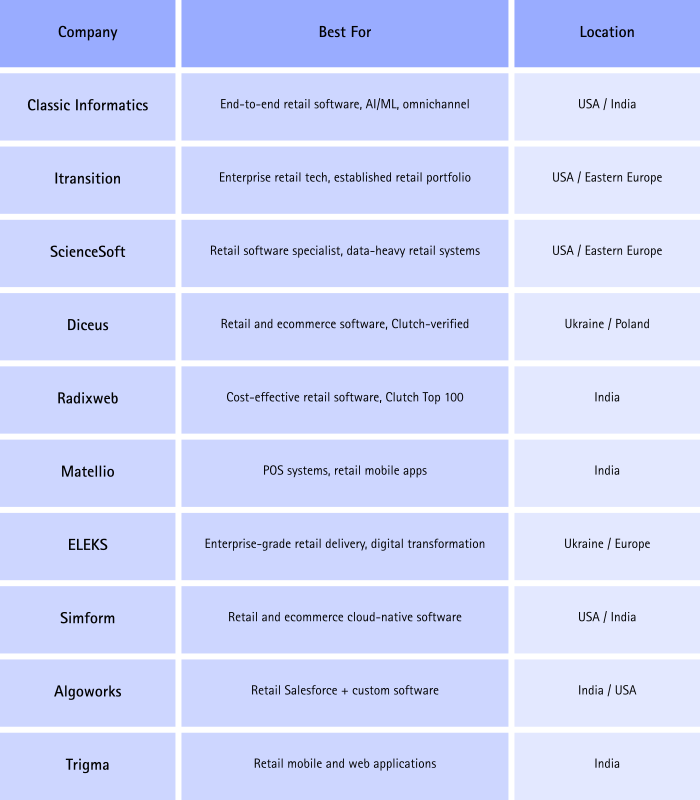
1. Classic Informatics
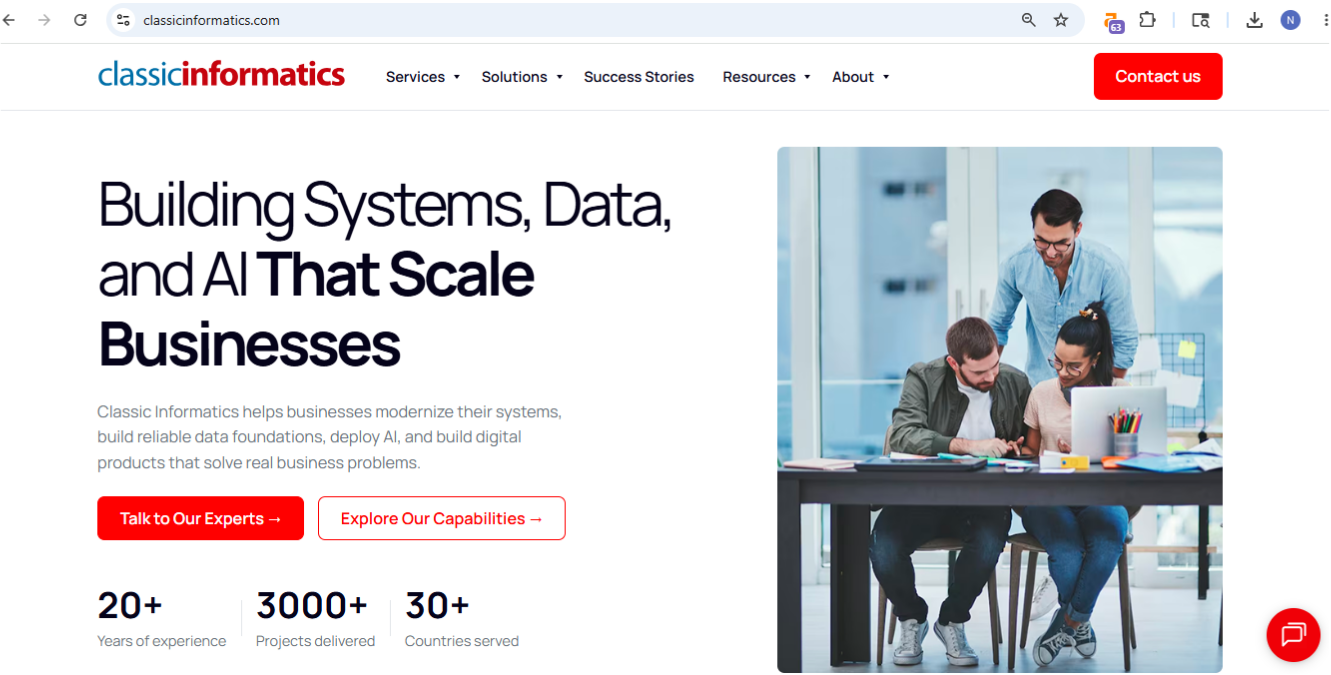
Classic Informatics has been building software for growth-stage and enterprise clients for over 23 years — and retail has been a core vertical throughout. With 3,000+ projects delivered, 1,000+ clients across 30+ countries, and a 95% client retention rate, Classic Informatics brings the kind of institutional knowledge that shows up in how they scope a project, not just how they execute it.
What sets Classic Informatics apart in retail is where they start: the operation, not the tech stack. Before a single line of code is written, the team maps how your inventory moves, how your customers shop, where your current systems break down, and what your peak-load reality looks like. That operational grounding is what separates good retail software from software that works in staging but falls over during a flash sale. Their custom retail software development practice covers everything from POS systems and inventory management to loyalty platforms, omnichannel order management, and headless ecommerce storefronts.
Classic Informatics also brings serious AI/ML depth to retail. Their custom AI/ML model development capability translates directly into retail use cases: demand forecasting that reduces overstock, personalization engines that lift conversion, and churn models that identify at-risk loyalty members before they leave. This isn't AI bolted on after the fact — it's built into the architecture from day one. Their retail and ecommerce software development service page goes deeper on the specific modules and integrations they've delivered for retail clients.
If you're evaluating partners who can own both the build and the long-term evolution of your retail software — and who understand the difference between a retailer and a generic B2C company — Classic Informatics belongs at the top of your shortlist.
-
Custom ecommerce platforms and headless commerce architecture
-
POS system development and integration
-
Real-time inventory management and warehouse connectivity
-
Loyalty and rewards program platforms
-
AI-powered product recommendations and demand forecasting
-
Omnichannel order management: BOPIS, ship-from-store, unified returns
Classic Informatics works best with product leaders and CTOs who want a partner that understands retail at the business level — and can grow the software as your retail operation grows.
2. Itransition
Itransition is a large-scale software development firm with a well-established retail technology portfolio. With a Domain Rating of 74 and consistent SERP presence for retail software keywords, they've built credibility in the market through volume and breadth of delivery.
Their retail practice covers ecommerce platform development, ERP integration, POS customization, and retail analytics. Itransition serves enterprise clients and has the delivery infrastructure to support large, multi-phase engagements. Their team is distributed across Eastern Europe and the US, giving them coverage across time zones for larger retail organizations.
-
Ecommerce platform development and customization
-
Retail ERP and CRM integration
-
POS system development
-
Retail analytics and reporting dashboards
-
Omnichannel solution architecture
Itransition is a reasonable choice for enterprise retail engagements where scale and process maturity matter more than boutique specialization.
3. ScienceSoft
ScienceSoft is one of the more recognized names in retail software — they've built a focused practice around it, and their Domain Rating of 77 reflects strong content authority in the space. They position themselves explicitly as a retail software specialist, which is reflected in how they scope and staff projects.
ScienceSoft's retail engagements tend to skew toward data-heavy implementations: retail analytics platforms, customer data integration, and AI-assisted merchandising. They've published detailed case studies in retail that give prospects a clear sense of their delivery methodology. Their consulting-first approach means they'll often spend meaningful time in discovery before recommending a technical direction.
-
Retail software consulting and architecture
-
Customer data platform (CDP) development for retail
-
AI-assisted merchandising and pricing tools
-
Retail ERP and supply chain integration
-
Ecommerce platform development
ScienceSoft is worth evaluating if your retail software challenge is primarily data-driven — analytics, customer intelligence, or supply chain visibility.
4. Diceus
Diceus is a Clutch-listed software development company with a retail and ecommerce track record and a Domain Rating of 52. They're a mid-size firm with development teams in Ukraine and Poland, and their retail portfolio includes ecommerce platforms, inventory systems, and B2B retail tools.
Diceus tends to work well with growth-stage retailers who need custom software built without the premium pricing of larger firms. Their Clutch reviews reflect solid delivery on mid-complexity engagements, and their team covers full-stack web, mobile, and backend development with retail-relevant integrations.
-
Custom ecommerce platform development
-
Inventory and warehouse management systems
-
B2B retail portals and ordering systems
-
Third-party payment and logistics integrations
-
Mobile retail applications
Diceus is a practical option for mid-market retailers looking for competent custom delivery without enterprise-tier pricing — though they're less differentiated on AI or advanced personalization.
5. Radixweb
Radixweb is an India-based software development company ranked in Clutch's Top 100, with retail software listed among their primary verticals. They've built a broad delivery portfolio covering web applications, mobile apps, and backend integrations relevant to retail operations.
Their retail work includes ecommerce development, inventory management, and POS integrations. Radixweb's competitive positioning is largely around cost-effectiveness and delivery speed, which makes them attractive for retailers building out new capabilities without large internal engineering teams.
-
Ecommerce website and platform development
-
Inventory management system development
-
POS software integration
-
Mobile retail app development
-
Payment gateway and third-party API integrations
Radixweb is a cost-effective choice for straightforward retail software builds, though larger or more complex omnichannel engagements may benefit from a partner with deeper retail domain expertise.
6. Matellio
Matellio is an India-based software firm with a noted focus on POS system development and retail mobile applications. They're Clutch-listed and have published retail-specific case studies and service pages that signal genuine vertical focus rather than generalist positioning.
Their retail practice covers POS systems, retail mobile apps, loyalty software, and ecommerce integrations. Matellio tends to work with mid-market retailers and franchise operations that need reliable, maintainable software without the overhead of a large consulting firm.
-
POS system development and customization
-
Retail mobile application development (iOS and Android)
-
Loyalty and rewards program software
-
Ecommerce platform integrations
-
Inventory tracking and management tools
Matellio is a reasonable fit for retailers specifically prioritizing POS and mobile app development — their specialization in that area is genuine.
7. ELEKS
ELEKS is a Ukraine-based software engineering company with a Domain Rating of 60 and enterprise-grade delivery credentials. They've worked with large retail and consumer goods clients on digital transformation engagements that go beyond individual application builds.
ELEKS positions themselves as a technology partner for complex, multi-system retail transformations — think legacy platform migrations, enterprise ecommerce rebuilds, and retail data platform implementations. Their engineering depth is strong, and they have a published retail industry practice with documented methodology.
-
Enterprise retail digital transformation
-
Legacy POS and ERP system migration
-
Retail data platform and analytics implementation
-
Custom ecommerce platform engineering
-
Cloud infrastructure for retail scalability
-
AI and machine learning for retail forecasting
ELEKS is best suited for larger retailers undertaking significant transformation programs — they bring the engineering horsepower but may be over-specified for leaner retail builds.
8. Simform
Simform is a Clutch-listed software development firm operating from the US and India. They've built a cloud-native delivery practice that covers retail and ecommerce software development as a named vertical.
Simform's retail work tends to be cloud-first: scalable ecommerce backends, microservices-based retail platforms, and mobile commerce applications. Their US presence gives them strong communication alignment with North American retail clients, while their India delivery team keeps cost structures competitive.
-
Cloud-native ecommerce platform development
-
Microservices architecture for retail systems
-
Retail mobile application development
-
API-first integrations for omnichannel retail
-
Retail analytics and reporting tools
Simform is a solid choice for retail teams prioritizing cloud-native architecture and modern engineering practices — particularly strong when scalability and API integration are the primary concerns.
9. Algoworks
Algoworks is an India-based, Clutch-listed software development firm with particular depth in Salesforce implementations and custom application development for retail clients. They operate with a US presence and have accumulated retail-specific Salesforce and custom software experience across mid-market clients.
Their retail work spans Salesforce Commerce Cloud implementations, custom retail CRM builds, loyalty platform development, and mobile retail applications. If your retail operation is already Salesforce-heavy, Algoworks' expertise in that ecosystem is a meaningful differentiator.
-
Salesforce Commerce Cloud development and customization
-
Custom retail CRM and customer data tools
-
Loyalty and rewards platform development
-
Retail mobile application development
-
ERP and third-party integration for retail
-
Custom ecommerce application development
Algoworks is the right call if your retail software roadmap is anchored in Salesforce — outside of that ecosystem, they're capable but less differentiated.
10. Trigma
Trigma is an India-based software development company with Clutch listings and a stated focus on retail mobile and web application development. They're a smaller firm with a portfolio that includes retail apps, ecommerce builds, and inventory management tools.
Trigma's positioning is largely around accessible pricing and web/mobile delivery for retail clients who need functional, well-built software without complex enterprise requirements. Their Clutch profile reflects consistent delivery on smaller-to-mid-size retail engagements.
-
Retail mobile application development (iOS and Android)
-
Ecommerce website development
-
Inventory management tools
-
Custom retail web applications
-
Payment gateway integrations
Trigma works best for smaller retailers and startups that need reliable mobile and web development without the overhead of a large firm.
How to Choose the Right Retail Software Development Company
The right retail software development company for you depends on what you're building, how complex your retail operation is, and where your biggest risks lie. Here's what to actually evaluate — beyond portfolio pages and sales decks.
-
Retail domain knowledge, not just software capability: Ask how they've handled peak-season scaling, inventory sync failures, or omnichannel order conflicts. Generic software shops rarely have good answers to retail-specific questions.
-
Scope of software development services: Can they handle the full lifecycle — architecture, build, integration, QA, deployment, and ongoing support? Or will you need to stitch multiple vendors together?
-
AI and personalization readiness: If your roadmap includes demand forecasting, recommendation engines, or dynamic pricing, confirm the partner has in-house AI/ML capability — not just a promise to figure it out.
-
Ecommerce integration depth: Good retail software development services providers can connect your storefront to your ERP, WMS, loyalty engine, and payment processor without creating a brittle integration mess.
-
References from actual retail clients: Request case studies or references specifically from retail or ecommerce clients. Bonus points if they can speak to a client who went through a platform migration or a peak-season traffic surge.
-
Communication and timezone fit: This matters more than most buyers account for. Delayed responses during a production issue aren't acceptable — confirm their support model and escalation process before signing.
-
Post-launch ownership model: A strong retail software partner doesn't disappear after go-live. Clarify how ongoing maintenance, feature development, and emergency support are handled.
Let's Sum Up!
Retail is moving fast, and the wrong tech partner doesn't just slow you down — it sets you back while your competitors build the capabilities that will define the next three years. Unified commerce, AI personalization, real-time inventory, and BOPIS aren't trends. They're expectations.
This list covers a range of capable partners. Some are better for large enterprise transformations. Some are strong in specific platforms like Salesforce. Some are cost-effective options for straightforward builds. The right one depends on where you are, where you're going, and how much risk you can tolerate in the build.
That said — if you want a partner who'll start with your retail operation and work backward to the technology, rather than the other way around, Classic Informatics is worth a conversation. They've done this across 1,000+ clients in 30+ countries for over two decades. The retention rate speaks for itself.
If you're building or modernizing retail software — whether that's an ecommerce platform, POS system, AI-powered personalization layer, or omnichannel inventory system — Classic Informatics builds retail software that scales with your business. Talk to our team whenever you're ready.
FAQS

Frequently Asked Questions
Retail software development companies build the systems that run retail operations — POS software, inventory management platforms, ecommerce storefronts, loyalty programs, omnichannel order management, and AI-powered personalization engines. The scope depends on your operation, but the goal is always the same: software that keeps your retail business running without breaking under pressure.