How an AI Development Company Helps You Build Products Faster

Gartner expects more than 40% of agentic AI projects to get cancelled before 2027. Not because the models don't work. Because most teams skip the unglamorous parts: defining the actual problem, gathering the right data, picking a realistic tech stack.
You don't have to be one of them.
Partnering with the right AI development company changes the odds, not by writing cleverer code, but by forcing the discipline most in-house teams skip when they're excited to just start building.
Key Takeaways
- An AI development company shortens your path from idea to product by front-loading the discovery and data work most teams rush past.
- Building an AI product typically costs $30,000 to $300,000+, depending on data complexity and whether you need a lean MVP or a production-grade build.
- Supervised, unsupervised, and reinforcement learning solve different problems, and picking the wrong one early is the most common mistake founders make.
- MLOps, not a one-time build, is what keeps an AI product accurate after launch, so treat deployment as the start, not the finish line.
- McKinsey found only 39% of companies using generative AI see any bottom-line impact. Adoption isn't the hard part. Implementation is.
What Does an AI Development Company Actually Do for Your Product?
An AI development company is a technology partner that helps you define, build, train, and deploy AI-powered software, covering everything from data strategy to production deployment, not just writing model code. Most founders assume they need a full-time ML team to get started. You don't. What you need is a partner who's shipped AI products before and knows where the actual risk lives.
That risk usually isn't the model. It's the strategy phase before anyone writes a line of code, the part that defines what problem you're actually solving and whether AI is even the right tool for it.
Here's the uncomfortable truth: your end users don't care whether your product "uses AI." They care whether it solves their problem better than what they're using today. Whether you call it AI development services or AI software development services, the job is the same: solve a real problem, not ship an AI feature for its own sake.
How Does the Idea-to-Product Process Actually Work?
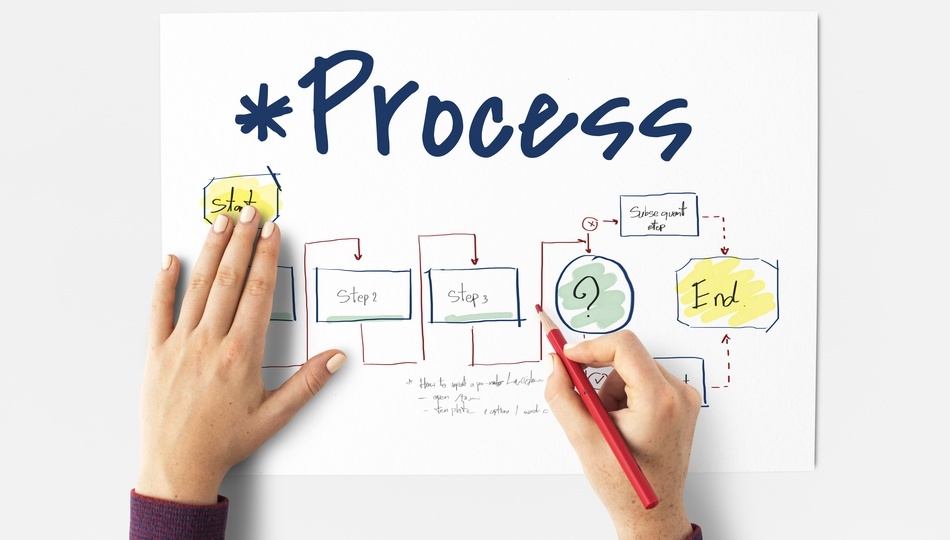
The process is similar to building any software product, with a few AI-specific steps layered in. Here's the order that actually works.
-
Clarify the problem you want AI to solve. Chasing "an AI feature" instead of a real customer problem is why so many AI projects stall at the proof-of-concept stage.
-
Gather and evaluate your data. AI needs data that's diverse, clean, and genuinely representative of real-world use, not just whatever happens to be sitting in your database.
-
Choose the right AI tech stack. Natural language processing, computer vision, and predictive analytics solve different problems. The right AI product development approach starts with the problem, not the trendiest model.
-
Build and train your model. This is where the ML technique matters. Supervised learning teaches the model with labeled examples. Unsupervised learning finds patterns in unlabeled data. Reinforcement learning improves through trial and error, closer to how people actually learn.
-
Integrate the model into your product. This is where MLOps comes in, an extension of DevOps that keeps feedback flowing between your engineering team and your data science team instead of treating them as separate workstreams.
-
Test and deploy. Rigorous testing matters more here than in typical software, because model accuracy can drift once it meets real-world data.
If you're validating a new idea rather than committing to a full build, starting with MVP development lets you test the riskiest assumption, usually "does this actually work for our users," before you spend six figures finding out the hard way.
What Does AI Product Development Cost in 2026?
Expect a wide range, and treat anyone quoting a single flat number with suspicion. A lean, single-feature AI MVP typically runs $30,000 to $80,000. A production-grade custom AI product development build, with model training, data pipelines, and full QA, usually lands between $140,000 and $300,000 or more.
Three things drive that gap: data preparation (often 40–60% of total cost), the complexity of the integrations you need, and whether you're operating in a regulated industry like healthcare or finance. A capable custom AI development company should be able to give you a realistic range within the first working session, not after weeks of discovery calls.
Should You Build In-House or Partner With an AI Development Company?
Partner, in most cases, unless you already have in-house ML engineers with production experience, which most startups and mid-market teams don't. That's exactly why artificial intelligence development services exist: to bring that production experience in from day one. Here's what a strong partner actually brings to the table.
-
Deep expertise across AI technologies and frameworks, so you're not the one evaluating a dozen different models from scratch.
-
Faster, more accurate API evaluation and integration, because they've already tested performance, accuracy, and documentation quality across dozens of tools.
-
Customization your product actually needs. Off-the-shelf AI APIs rarely fit your use case out of the box; a good partner tunes and fine-tunes until they do.
-
Data preparation support, including sourcing, cleaning, and labeling the datasets your models train on.
-
Rigorous testing and QA, including the unit, integration, and performance testing most in-house teams underinvest in.
-
Ongoing support after launch, since models need monitoring and retraining as real-world data shifts.
Enterprise-grade AI development services exist precisely because most of this work is repeatable; a partner who's done it dozens of times will get you there faster than a team doing it for the first time. If you're weighing off-the-shelf APIs against a fully bespoke build, custom AI model development is worth a conversation before you commit either way. And if your AI ambitions sit inside a broader software roadmap, AI/ML development support can cover both the product and the infrastructure underneath it.
Let's Sum Up!
Building an AI product isn't riskier than building any other kind of software. It's just unforgiving of shortcuts. Skip the discovery phase, skip the data work, or skip testing, and it shows up fast, in production, in front of your users.
If you're weighing whether to build your AI product in-house or bring in outside expertise, Classic Informatics has helped founders and product teams take AI ideas from concept to launch across manufacturing, healthcare, and technology. Talk to our AI development team whenever you're ready to figure out what that actually looks like for your product.
 FAQS
FAQS
Frequently Asked Questions
A lean AI MVP typically takes 8–12 weeks from clarified requirements to launch. A production-grade build with custom model training and full integration usually takes 4–6 months. Data readiness is the biggest variable — clean, labeled data speeds things up significantly, while messy data adds weeks to the front end.