Picking an application modernization partner is a bigger commitment than most enterprises treat it. The engagement runs for years. The team gets deep into your most critical systems. And if the fit is wrong, you usually find out six months in — when the contract is signed and the work is already behind.
The problem isn't the shortlist. It's the evaluation. Most teams rely on the same three inputs: a polished proposal, a reference call, and instinct. None of those catch the issues that surface after kickoff.
This blog looks at 10 application modernization companies worth putting on your shortlist in 2026 — and what to actually evaluate before you choose one.
Key Takeaways
- A credible partner assesses your estate before proposing an approach — proposal before assessment means they're selling, not advising.
- Certifications and cloud badges are table-stakes. Case studies with measurable outcomes are what actually matter.
- The best application modernization companies apply different strategies to different applications — not one methodology across the portfolio.
- Post-delivery model matters as much as delivery. Partners who disengage at go-live leave you with no institutional knowledge.
- Classic Informatics has delivered 3,000+ projects across 30+ countries with a 95% client retention rate.
How We Evaluated These Application Modernization Companies
We assessed these application modernization vendors against criteria that reflect how modernization programmes actually succeed and fail — not just what a proposal looks good on paper.
-
Delivery evidence over credentials: Case studies with measurable before-and-after outcomes from comparable programmes — same scale, same legacy complexity. Not certifications.
-
Assessment before proposal: Does the partner invest in understanding your estate before recommending an approach? Proposal-first is a red flag.
-
Approach flexibility: The best application modernization services companies apply the right strategy per application — rehost, refactor, re-architect, retire — rather than one methodology across the board.
-
Phased delivery with value per phase: Does each phase deliver something usable, or are phases just milestones in a disguised waterfall?
-
Post-delivery support model: How does engagement look 12 months after the first go-live? Partners who exit at handover leave no institutional knowledge behind.
-
Honest risk disclosure: A credible partner can describe specifically what's most likely to go wrong. Vague confidence is not reassurance.
10 Application Modernization Companies Worth Evaluating
1. Classic Informatics
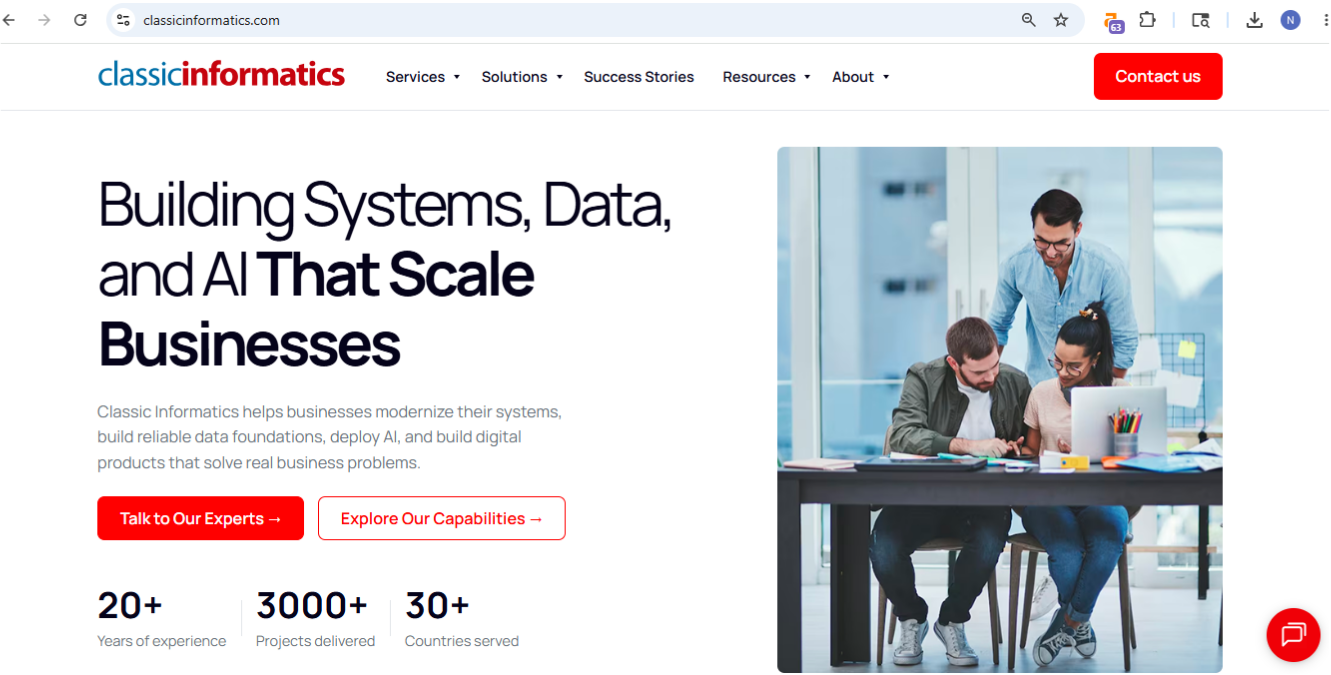
Classic Informatics is a technology services partner with 24+ years of delivery across legacy modernization, cloud migration, and AI-readiness programmes. With 3,000+ projects across 30+ countries and a 95% client retention rate, the team works across the full modernization lifecycle — from initial estate assessment through phased delivery and long-term platform support.
What differentiates Classic Informatics is the continuity model: the team that runs the assessment is the team that delivers, which preserves institutional knowledge across phases and closes the gap between what was proposed and what gets built. The approach applies the right strategy per application rather than a single methodology across the portfolio.
-
Legacy application transformation and re-architecture
-
Cloud migration and cloud-native development
-
AI-readiness programmes and AI integration
-
Phased modernization with business outcomes per phase
-
Post-delivery platform support and evolution
Strong fit for mid-market to large enterprises seeking a specialist partner with hands-on delivery accountability across multi-phase programmes.
2. N-iX
N-iX is a Ukrainian and Polish software engineering company with around 2,000 engineers and a dedicated application modernization practice. They work primarily with European and North American clients on complex re-architecture projects: monolith decomposition, microservices migration, and cloud-native rebuilds.
Their differentiator is engineering depth. N-iX staffs modernization engagements with specialists rather than generalists, which matters when the technical complexity of the legacy estate is high and the programme requires sound architecture judgment at every phase.
-
Monolith-to-microservices decomposition
-
Cloud-native re-architecture on AWS, Azure, and GCP
-
Legacy application assessment and modernization roadmapping
-
DevOps pipeline implementation and CI/CD
-
Dedicated engineering team models
Good fit for organisations with technically complex re-architecture requirements. For enterprises that need heavy advisory and change management alongside engineering, a consulting-led partner may also be needed.
3. Simform
Simform is an India and USA-based technology company with around 1,000 engineers, specialising in application modernization and cloud transformation across fintech, healthcare, and logistics sectors. They have a consistent Clutch presence and a track record in re-platforming older applications to AWS and Azure.
Their delivery model is project-based and dedicated team hybrid, giving clients flexibility to scale team size to their programme stage without locking into a single engagement structure.
-
Legacy application re-platforming and cloud migration
-
Full-stack modernization across web and mobile
-
Microservices and container-based architecture
-
AI and automation integration into legacy workflows
-
DevOps and CI/CD implementation
Solid fit for mid-market companies modernizing a defined set of applications on a time-bound programme. For portfolio-wide transformation across complex enterprise estates, a partner with deeper advisory capability may be better suited.
4. ScienceSoft
ScienceSoft is a USA and Eastern European IT services company founded in 1989, with dedicated practices in software development, legacy modernization, and consulting. They serve highly regulated industries — healthcare, finance, and manufacturing — where compliance-aware modernization is a specific delivery requirement from day one.
Their long track record and ISO 27001 certification give them credibility in environments where data security and regulatory governance are non-negotiable programme constraints.
-
Legacy application assessment and modernization strategy
-
HIPAA, SOC 2, and PCI-DSS compliant delivery
-
Cloud migration and cloud-native development
-
API integration and middleware modernization
-
Long-term support and platform maintenance
Good fit for regulated industries where compliance requirements shape the entire approach. For very large, multi-geography programmes, verify their scale matches your scope.
5. Innowise
Innowise is a Poland and Ukraine-based software engineering company with 1,000+ engineers and a dedicated legacy modernization practice. They cover system audits, re-engineering, API integration, and cloud migration across a range of tech stacks, and offer both full-project and team augmentation engagement models.
Their flexibility in engagement structure is useful for organisations that have internal development capacity and need to supplement it rather than replace it entirely.
-
Legacy infrastructure audit and modernization roadmapping
-
API integration and middleware re-engineering
-
Cloud migration to AWS, Azure, and Google Cloud
-
Kubernetes and containerisation
-
Post-modernization maintenance and support
Good fit for organisations wanting a capable Eastern European partner with a specific modernization focus. For organisations needing deep industry domain knowledge, verifying sector-specific case studies is worthwhile before committing.
6. Aziro
Aziro (formerly MSys Technologies) is an India and USA-based company with 1,300+ employees, focused on helping enterprises transition from legacy architectures to modern, cloud-native and SaaS-based delivery models. They work across application modernization, digital experience, and platform engineering.
Their SaaS-based modernization model makes them particularly relevant for product companies looking to re-architect their software for subscription or cloud delivery — not just enterprises migrating infrastructure.
-
Legacy-to-SaaS application transformation
-
Cloud migration and cloud-native platform engineering
-
Agile digital experience development
-
API enablement and system integration
-
DevOps and automation implementation
Good fit for software companies modernizing their product architecture alongside infrastructure. For advisory-heavy assessment work or very large enterprise programmes, verify their relevant track record first.
7. Damco Group
Damco Group is an India-based IT services company with a consistent Clutch presence in custom software development and legacy modernization. They work with mid-market businesses across a range of industries, offering phased legacy modernization delivery at commercially accessible price points.
Their engagement model suits organisations that need competent execution without Tier-1 pricing structures — particularly for scoped programmes where the legacy complexity is well-understood upfront.
-
Legacy application modernization and re-engineering
-
Custom software development alongside modernization
-
Cloud migration and integration
-
Mobile and web application rebuilds
-
QA testing and post-launch support
Good fit for mid-market businesses seeking solid delivery at cost-efficient price points. For enterprises with highly complex legacy estates or strict compliance requirements, a partner with deeper specialisation is advisable.
8. HexaView Tech
HexaView Tech is an India and USA-based technology company specialising in enterprise application modernization, data engineering, and digital transformation. They serve healthcare, finance, and retail clients with a particular focus on data-driven modernization — updating the application layer and the data infrastructure underneath it simultaneously.
That dual capability makes them relevant for programmes where data migration and data platform modernization are as complex as the application work itself.
-
Enterprise application modernization and re-architecture
-
Data platform modernization alongside application updates
-
Cloud migration and hybrid infrastructure
-
AI and automation integration
-
Custom enterprise application development
Good fit for organisations where modernizing the data layer is as critical as updating the application. For pure infrastructure or pure application programmes, their combined scope may be broader than required.
9. Leobit
Leobit is a Ukraine and Poland-based software company with 50–249 engineers, specialising in .NET modernization, desktop-to-web migration, and full-cycle application re-engineering. They hold ISO 27001/9001 certification and a Microsoft Gold Partnership, and serve primarily technology companies and startups in the US, EU, and UK.
Their .NET depth and desktop-to-web specialisation make them a strong choice when the legacy stack is Windows-based and the modernization target is web or cloud-native.
-
.NET Core and ASP.NET modernization
-
Desktop-to-web application migration
-
Legacy application re-engineering and refactoring
-
Cloud-native development on Azure
-
DevOps and CI/CD implementation
Strong fit for organisations with Windows-based .NET legacy applications. For teams with non-.NET stacks or large enterprise programmes, a generalist partner with broader stack coverage may be more appropriate.
10. Entrans
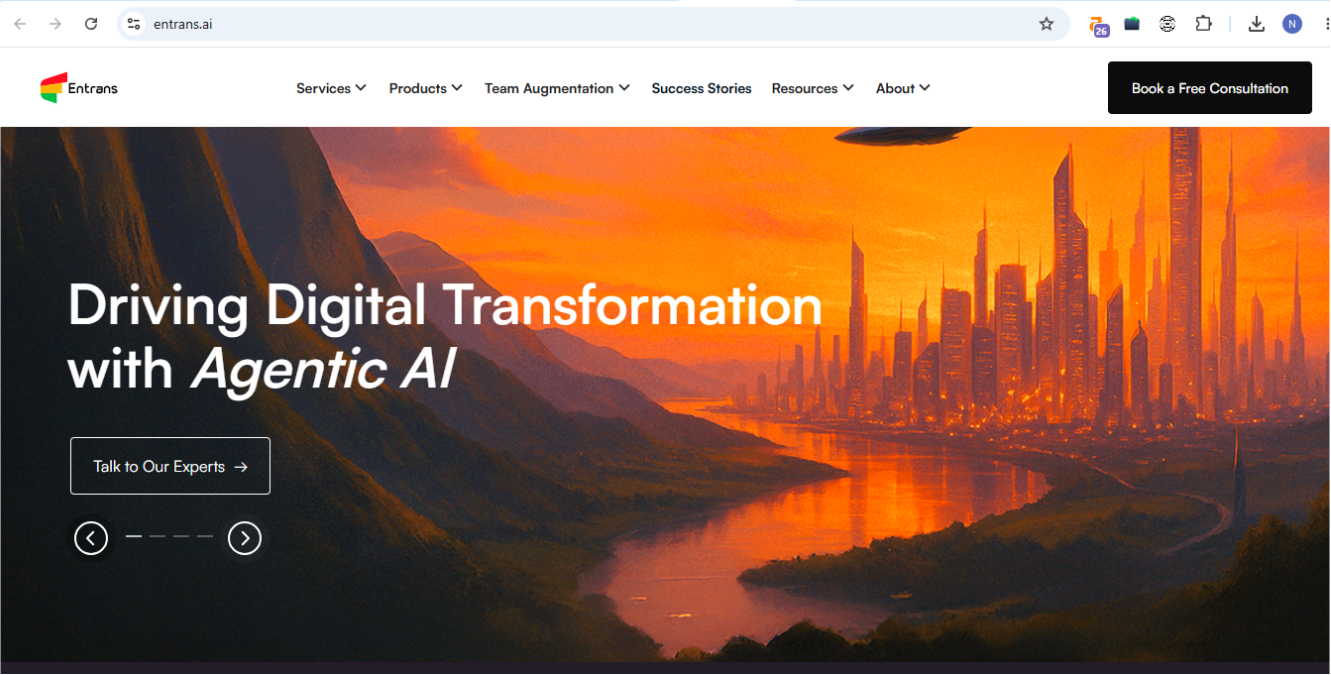
Entrans is an India-based digital engineering company building a reputation for AI-first application modernization — particularly for enterprises whose goal isn't just a modernized application but an AI-capable one. They work with Fortune 500 companies and high-growth businesses on cloud-native SaaS platform transformation and agentic workflow integration.
Their focus on autonomous AI embedded within modernization makes them relevant where AI readiness is a primary driver of the programme, not a follow-on phase.
-
AI-first and agentic workflow modernization
-
Legacy-to-cloud-native SaaS platform transformation
-
Data engineering and cloud infrastructure
-
DevOps pipeline implementation
-
Enterprise automation and AI integration
Good fit for organisations where AI integration is a primary modernization goal. As a newer firm (founded 2020), verify case studies for programmes comparable in scale and complexity to yours.
How to Choose the Right Modernization Partner
So what actually separates the right partner from an expensive mistake? A few questions worth asking before you shortlist.
-
Does their proposal follow an assessment, or precede it? A detailed proposal produced within days of your first conversation means they're selling a methodology, not solving your problem. The right partner won't give you a full proposal until they've assessed your estate.
-
Can they show you outcomes, not just clients? Reference logos tell you who they've worked with. Case studies with measurable before-and-after outcomes — reduced deployment frequency, lowered incident rates, specific cost savings — tell you what they actually delivered.
-
Do they apply different approaches to different applications? Ask whether they've ever recommended retiring an application instead of modernizing it. The answer reveals whether they're selling a service or solving a problem.
-
What does phase one deliver on its own? If the programme stopped after phase one, would you have something useful? If not, the phases are milestones in a waterfall project, not genuine increments.
-
What's their post-go-live model? Ask specifically what engagement looks like 12 months after the first delivery. Partners who exit at handover leave no institutional knowledge about why decisions were made.
-
What's most likely to go wrong? A credible partner has a specific, honest answer to this question. Vague reassurance is not a risk assessment.
You can also apply these criteria directly to the application modernization strategy conversations you have with shortlisted partners — how they answer tells you as much as what they answer.
Let's Wrap This Up!
Application modernization is one of the longest, most embedded engagements a technology team makes. Getting it right starts well before the contract is signed.
Every company on this list is credible in its context. The question isn't which one is best in the abstract — it's which one fits your specific estate, timeline, compliance requirements, and internal capacity.
If you're evaluating a partner for legacy application transformation, cloud migration, or AI-readiness programmes, Classic Informatics brings 24+ years of delivery depth and an engagement model where the team that assesses your estate is the team that delivers it. We've built and modernized 3,000+ products across 30+ countries. Talk to us whenever you're ready to scope your programme.
FAQS

Frequently Asked Questions
Knowing how to choose application modernization companies comes down to seven criteria: delivery evidence over credentials, assessment before proposal, approach flexibility, phased delivery with outcomes per phase, business outcome accountability, a credible post-delivery model, and honesty about scope and risk. The most reliable shortcut: ask for case studies with measurable outcomes and reference calls.