Logistics runs on speed and precision. Your software should too.
The problem most logistics businesses face isn't a shortage of software options — it's finding a development partner who actually understands the complexity underneath: real-time tracking, multi-carrier integrations, warehouse operations, and route optimisation logic that doesn't break when volumes spike. Generic software companies build logistics features. The best logistics software development companies build logistics systems.
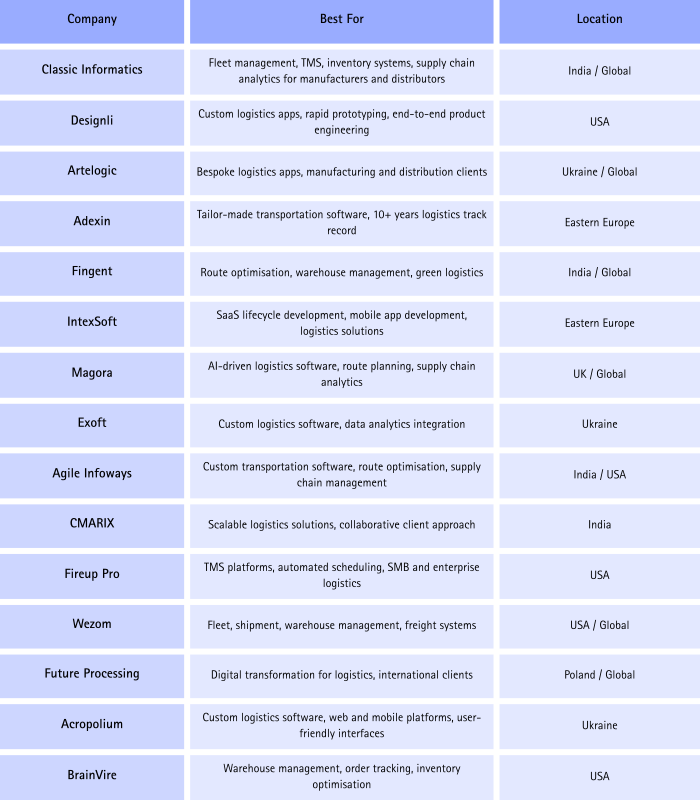
This post lists 15 companies worth evaluating, with a clear breakdown of what each does well and who they're best suited for.
Key Takeaways
- Logistics software development companies vary widely in specialisation — some focus on transportation management systems (TMS), others on warehouse management, last-mile delivery, or full supply chain platforms.
- Classic Informatics builds custom logistics and transportation software for manufacturers and distributors, with deep experience in fleet management, inventory systems, and supply chain analytics.
- The best logistics software development partner for your business depends on whether you need custom development, system integration, or a productised solution built to your operational requirements.
- Evaluating a logistics software company requires looking beyond technical capability to delivery model, integration track record, and post-launch support — all of which determine whether the system holds up at scale.
- Logistics and transportation software development is a high-stakes category: poor architecture decisions show up at peak volume, when you can least afford them.
What Makes a Good Logistics Software Development Company?
Not all logistics software development services are built the same. The gap between a team that can build a tracking dashboard and one that can architect a production-ready transportation management system is significant.
Custom logistics software development requires understanding operational workflows that are highly specific to each client — the way a regional distributor manages routes is nothing like how an e-commerce fulfilment centre manages inventory. Good logistics development partners come in knowing the domain, not just the technology.
How We Evaluated These Logistics Software Development Companies
We evaluated each company on its actual delivery record in logistics, supply chain, and transportation software — not on marketing claims or generalised software capabilities.
-
Domain expertise: Does the company have genuine logistics and transportation software experience, or is this a generalist shop with a logistics case study?
-
Integration capability: Logistics software connects to ERP systems, third-party APIs, mapping services, and hardware. We looked for demonstrated integration depth.
-
Custom development vs. platform: Some companies customise existing logistics platforms; others build from scratch. We noted which approach each firm takes.
-
Scalability track record: Logistics systems are stress-tested at peak. We weighted companies that have built and maintained systems at operational scale.
-
Post-launch support: Route changes, carrier updates, and operational changes require responsive support. We considered ongoing maintenance capability.
15 Logistics Software Development Companies Worth Evaluating
1. Classic Informatics
Classic Informatics specialises in building custom logistics and transportation software for manufacturers and distributors — companies that need systems tailored to their operational reality, not off-the-shelf tools with workarounds layered on top.
The team works directly with clients to design, build, and release logistics applications that cover the full operational picture: inventory management, supply chain analytics, cycle-time analysis, query and reporting, and fleet management. Where many logistics software companies focus on a single vertical, Classic Informatics brings experience across both asset-intensive logistics operations (fleets, warehouses) and distribution-led supply chains.
What sets Classic Informatics apart in the logistics and transportation software development space is the integration depth. Their engineers build web-based fleet and transportation management systems that connect seamlessly with clients' existing ERP and operational infrastructure — rather than sitting alongside it as a separate system teams have to maintain in parallel. That integration-first approach is what makes the software actually stick at scale.
Core capabilities:
-
Custom transportation management systems (TMS)
-
Fleet management and asset tracking software
-
Inventory and warehouse management systems
-
Supply chain analytics and reporting
-
ERP and third-party API integration
-
Mobile and web logistics applications
If you're a manufacturer or distributor evaluating custom logistics software development and want a partner with both the technical depth and logistics domain knowledge to get it right, Classic Informatics is a strong starting point. Talk to the logistics team to discuss your requirements.
2. Designli
Designli is a product engineering studio with a strong focus on custom logistics application development. They work across the full build lifecycle — from concept and prototyping through to scaling a production system — with an emphasis on intuitive UX and end-to-end engineering.
Their logistics work spans fleet management software, transportation management systems, and custom apps for tracking, routing, and customer visibility. The team is particularly well-suited to companies that need to move from idea to working prototype quickly.
Core capabilities:
-
Rapid prototyping and product discovery
-
Custom logistics and transportation app development
-
Fleet management software
-
End-to-end product engineering and maintenance
-
UX design for logistics workflows
Best suited for: Companies that need speed to first version, with a team that can own design through to delivery.
3. Artelogic

Artelogic, now Unicrew, builds custom logistics software for manufacturers and distributors with a focus on scalability and operational depth. Their development teams engage directly with clients to understand operational workflows before writing a line of code — which shows up in software that fits real processes rather than forcing process change.
Their work covers route optimisation, inventory management, logistics analytics, and transportation systems. The company's lean engagement model makes them accessible for mid-market logistics businesses as well as larger enterprises.
Core capabilities:
-
Bespoke logistics application development
-
Route optimisation and fleet tracking
-
Inventory and warehouse management systems
-
Supply chain analytics
-
Integration with third-party logistics platforms
Best suited for: Manufacturers and distributors who need custom logistics and transportation software development with engineering teams that understand operational complexity.
4. Adexin
Adexin has been building transportation software solutions since 2011, and that track record shows. With over 100 completed logistics projects across 70+ clients, they bring genuine depth to custom transportation and logistics software development — particularly for businesses looking to modernise or extend existing systems rather than build from scratch.
Core capabilities:
-
Custom transportation management software
-
Logistics consulting and software development
-
System modernisation and integration
-
Freight and route management tools
-
Fleet tracking and optimisation
Best suited for: Companies with established logistics operations looking to modernise legacy transportation software or extend existing platforms.
5. Fingent
Fingent delivers logistics software across a wide operational range — from route planning and warehouse management to green logistics, reverse logistics, and automotive. They hold ISO 27001:2013 certification, which matters for logistics clients handling sensitive supply chain and customer data.
Core capabilities:
-
Transportation management systems (TMS)
-
Warehouse management systems (WMS)
-
Supply chain management for e-commerce
-
Route planning and optimisation
-
Green and reverse logistics platforms
Best suited for: E-commerce businesses and logistics providers needing WMS and supply chain software with compliance-conscious development.
6. IntexSoft
IntexSoft is a full-lifecycle software development company with a logistics software practice covering mobile development, system redesign, and business intelligence integration. Their approach emphasises understanding client requirements deeply before scoping the build — useful for logistics companies whose processes are complex or partially undocumented.
Core capabilities:
-
Logistics software development and integration
-
Mobile app development for logistics operations
-
Business intelligence and analytics integration
-
Interface redesign and modernisation
-
DevOps and SaaS lifecycle management
Best suited for: Logistics businesses that need both operational software and analytics capability in a single engagement.
7. Magora
Magora brings AI and big data capabilities to logistics software development — building systems that don't just track and route, but analyse and optimise. Their team leverages machine learning for supply chain forecasting, route efficiency, and inventory prediction, which separates them from more traditional logistics software development services.
Core capabilities:
-
AI-driven logistics and supply chain software
-
Route planning and optimisation
-
Inventory management with predictive analytics
-
Custom logistics app development
-
Big data integration for logistics operations
Best suited for: Logistics businesses ready to move beyond operational software toward AI-enhanced supply chain optimisation.
8. Exoft
Exoft builds custom logistics management software with a client-centric development model — they prioritise collaborative engagement with clients throughout the build, which reduces the gap between what gets specified and what gets delivered. Their team applies AI and data analytics to logistics challenges including route efficiency, predictive maintenance, and operational analytics.
Core capabilities:
-
Custom logistics management software
-
AI and data analytics integration
-
Supply chain system development
-
Fleet and transportation software
-
Client-collaborative delivery model
Best suited for: Logistics companies that want a development partner deeply involved in requirements definition, not just execution.
9. Agile Infoways
Agile Infoways combines logistics domain expertise with agile delivery. Their specialisation in custom transportation logistics software covers route optimisation, fleet tracking, and supply chain management — with a documented track record of reducing delivery costs and improving route efficiency for clients.
Core capabilities:
-
Custom transportation logistics software
-
Route optimisation and fleet management
-
Supply chain management platforms
-
Logistics analytics dashboards
-
End-to-end logistics app development
Best suited for: Mid-market logistics companies needing agile delivery with logistics-specific technical expertise.
10. CMARIX
CMARIX builds custom logistics and supply chain software with a strong focus on client collaboration. Their development methodology emphasises understanding each client's specific operational challenges before designing solutions — which results in software that fits rather than forces process adaptation.
Core capabilities:
-
Custom logistics and supply chain software
-
Scalable transportation management systems
-
Collaborative requirements definition
-
Logistics platform development and integration
-
Post-launch optimisation and support
Best suited for: Logistics businesses that have had poor experiences with generic software and want a development partner that starts from their operational reality.
11. Fireup Pro

Fireup Pro specialises in transportation management system (TMS) software development, with a focus on simplifying complex logistics operations for businesses of all sizes. Their platforms include automated scheduling, intelligent analytics, and integration with existing systems — and they prioritise user-friendly interfaces that logistics professionals can adopt without extensive training.
Core capabilities:
-
TMS platform development
-
Automated scheduling and dispatch tools
-
Logistics analytics integration
-
ERP and third-party system integration
-
User-centric logistics software design
Best suited for: Companies that need logistics and transportation software development with a focus on operational simplicity and user adoption.
12. Wezom
Wezom is a US-headquartered logistics software company with 23+ years of experience and recognition as a Top Logistics and Supply Chain Consulting Company by Clutch. Their logistics platform capabilities span fleet management, shipment tracking, warehouse systems, freight management, employee management, and route planning — a broad suite for companies with complex multi-function logistics operations.
Core capabilities:
-
Fleet, shipment, and warehouse management systems
-
Freight and route planning software
-
Employee management for logistics operations
-
Asset tracking and management
-
Logistics process assessment and software design
Best suited for: Larger logistics operations that need a full suite of interconnected logistics software rather than a point solution.
13. Future Processing

Future Processing brings 23 years of software engineering experience to the logistics sector, with a portfolio of international clients across complex supply chain and transportation projects. Their strength is in digital transformation engagements — helping logistics companies modernise legacy platforms and build toward more scalable, cloud-based architectures.
Core capabilities:
-
Logistics software development and digital transformation
-
Custom transportation and supply chain systems
-
Legacy system modernisation
-
Cloud migration for logistics platforms
-
Long-term engineering partnerships
Best suited for: Logistics businesses with legacy systems that need a trusted long-term engineering partner for modernisation and rebuild.
14. Acropolium
Acropolium specialises in highly scalable custom logistics software for web and mobile platforms, with dedicated development teams experienced in building logistics applications that improve operational efficiency and reduce costs. Their emphasis on user-friendly interface design makes their software easier for logistics teams to adopt quickly.
Core capabilities:
-
Custom logistics software for web and mobile
-
Dedicated development teams for logistics projects
-
User-friendly UI/UX for logistics workflows
-
Scalable logistics application architecture
-
Ongoing maintenance and optimisation
Best suited for: Logistics companies that prioritise user adoption as a success metric alongside technical capability.
15. BrainVire
BrainVire delivers logistics automation software focused on warehouse management, order tracking, and inventory optimisation. Their strength lies in data analytics integration — building systems that surface actionable insights from logistics operations data, so management teams can make faster decisions on inventory levels, fulfilment performance, and carrier efficiency.
Core capabilities:
-
Warehouse management software
-
Order tracking and fulfilment systems
-
Inventory optimisation tools
-
Logistics data analytics and reporting
-
Custom software architecture for logistics
Best suited for: E-commerce and retail logistics businesses that need warehouse and inventory management software with strong analytics capability.
How to Choose the Right Logistics Software Development Partner
Picking the wrong development partner for a transportation and logistics software development project doesn't just waste budget — it creates operational systems that break under real-world load or require constant firefighting to maintain. Here's what to look at before you commit:
-
Logistics domain knowledge: Ask specifically about their experience with your type of operation (fleet, warehouse, e-commerce fulfilment, freight). Generic software development experience doesn't translate cleanly to logistics complexity.
-
Integration capability: Logistics software rarely operates in isolation. It needs to talk to ERPs, carrier APIs, mapping services, and hardware. Verify their integration track record explicitly.
-
Custom vs. platform approach: Some firms customise existing logistics platforms; others build from scratch. If your workflows are differentiated, custom software development for logistics is almost always the better long-term investment. Understand which approach each firm takes and whether it matches your requirements.
-
Scalability planning: Your software will be tested at peak volume — seasonal surges, unexpected demand spikes. Ask how they handle scalability in the architecture phase, not after launch.
-
Post-launch support model: Logistics operations change. Carriers change their APIs. Routes change. Systems need updates. Understand what ongoing support looks like before you sign.
-
Communication and collaboration: For custom logistics software development, communication quality during the build matters enormously. Reference calls with similar clients are worth the time.
-
Total cost of ownership: The build cost is one number. Maintenance, integration work, and future feature development are others. Get clarity on the full picture upfront. Reviewing software development best practices before scoping your engagement will help you ask the right questions.
Let's Wrap This Up!
Logistics software development is not a commodity. The difference between a system that supports your operations and one that creates new operational problems is almost always in the quality of the development partner — their domain understanding, their architecture decisions, and their willingness to stay involved after launch.
The companies on this list represent different strengths, different delivery models, and different ideal clients. The right fit depends on what you're building, who you're building it for, and how complex your integration requirements are.
If you're building custom logistics software — whether that's a fleet management system, a transportation management platform, or a full supply chain analytics solution — Classic Informatics has the logistics domain depth and engineering experience to build it right. See what we've built for logistics and transportation clients.
FAQS

Frequently Asked Questions
Logistics software development companies build custom systems for transportation management (TMS), fleet tracking, warehouse management (WMS), route optimisation, supply chain analytics, and inventory control. The best ones build systems integrated with your existing ERP, carrier APIs, and operational infrastructure — not standalone tools that create data silos.