
Building a product is hard. Picking the wrong partner to build it with is harder to recover from.
The product development companies on this list all ship working software — that's table stakes. What separates them is fit: who they build for, how they balance speed against architecture, and what happens after version one ships. Harvard Business Review's research on product launches found most new products fail, and weak execution partners are a recurring reason.
This post compares ten companies worth evaluating in 2026, what each does best, and how to choose between them.
Key Takeaways
- The best product development companies are distinguished by fit, not rankings — match their strengths to your product type and stage.
- Full-cycle partners (discovery through post-launch) reduce handoff risk compared with assembling separate design, build, and QA vendors.
- AI capability is now a baseline requirement; partners without production AI experience will date your product at launch.
- Pricing models matter as much as rates: fixed-scope suits defined builds, dedicated teams suit evolving products.
- Ask every shortlisted product development firm for a case study matching your industry and your scale.
How We Evaluated These Product Development Companies
Our criteria reflect what mid-market and startup buyers consistently say mattered most a year after signing:
- Full-cycle capability: Discovery, design, engineering, QA, and post-launch support under one roof, reducing handoff loss between vendors.
- Engineering depth: Production experience across web, mobile, cloud, and AI — not just brochure claims.
- Client evidence: Verified reviews, long-term engagements, and named outcomes on platforms like Clutch.
- Stage range: Ability to serve both a founder's first MVP and an enterprise platform rebuild.
- Post-launch behaviour: Documented support, scalability planning, and clean handover practices.
10 Product Development Companies Worth Evaluating
1. Classic Informatics
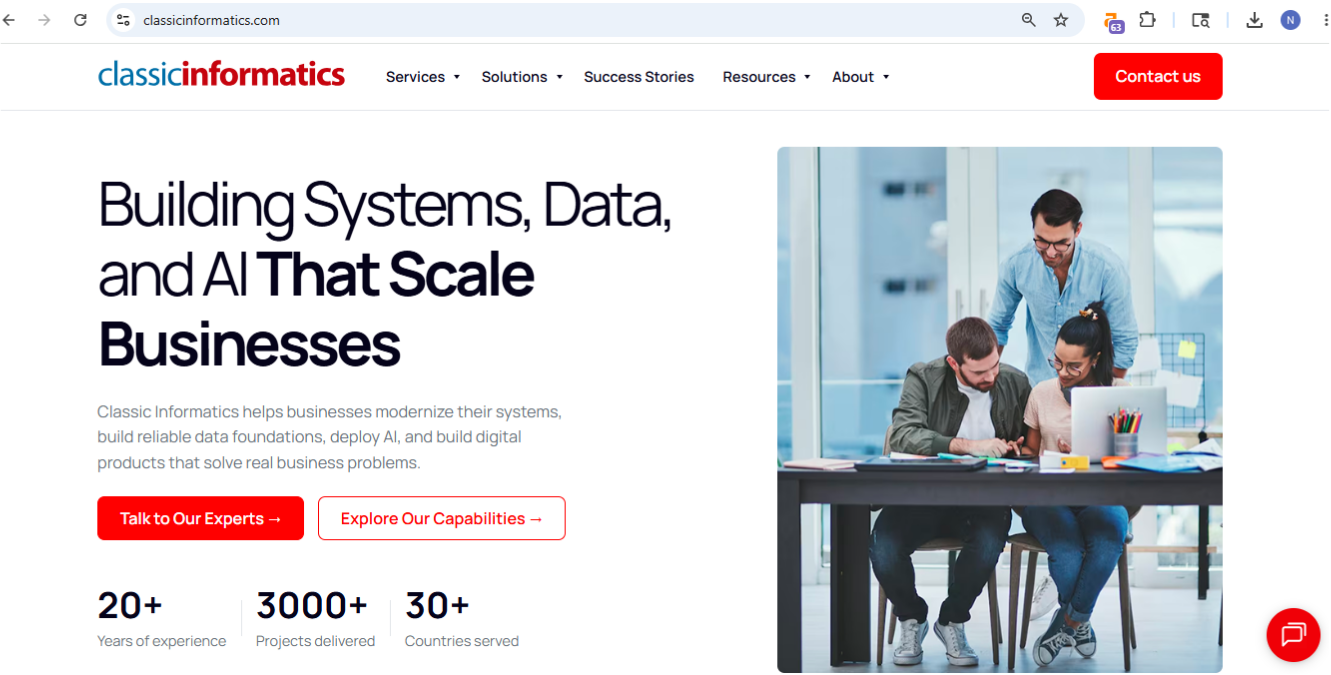
Classic Informatics is a technology partner for businesses that need product development handled end to end — from discovery and MVP to enterprise-scale platforms — with AI treated as a core engineering capability rather than a feature bolted on at the end.
Established in 2002, the company brings 23+ years and 3,000+ delivered projects across 30+ countries, with a 95% client retention rate that says more about post-launch behaviour than any brochure could. Teams operate from India with offices in London and Sydney, working as embedded product engineering units inside client organisations.
What makes the approach different is the balance: speed where speed matters (rapid prototyping, CI/CD pipelines, iterative releases) and architecture where architecture matters (systems designed for the scaling event, not just the demo). The same team that ships your MVP development sprint can carry the product to enterprise grade, which removes the painful re-platforming step most startups hit at growth stage.
- AI-powered application development
- SaaS platform engineering
- MVP development and product discovery
- Enterprise workflow systems
- Legacy product modernization
- Full-stack web and mobile delivery
If you're building a product that needs to survive growth — not just launch — that long-horizon engineering mindset is the reason to start the conversation here.
2. ELEKS
ELEKS is a fit for large enterprises and scale-ups that want deep technical consultancy alongside delivery.
With over 2,000 engineers and decades of product work, the company is known for rigorous discovery and product design phases before code starts, which suits complex, ambiguous briefs. Their data science and R&D practices stand out among European product engineering companies.
- Custom software product development
- Product design and discovery
- Data science and AI integration
- Quality assurance and testing
Choose ELEKS for complexity and scale; very early-stage founders may find the engagement model heavier than startup-focused studios.
3. eSparkBiz
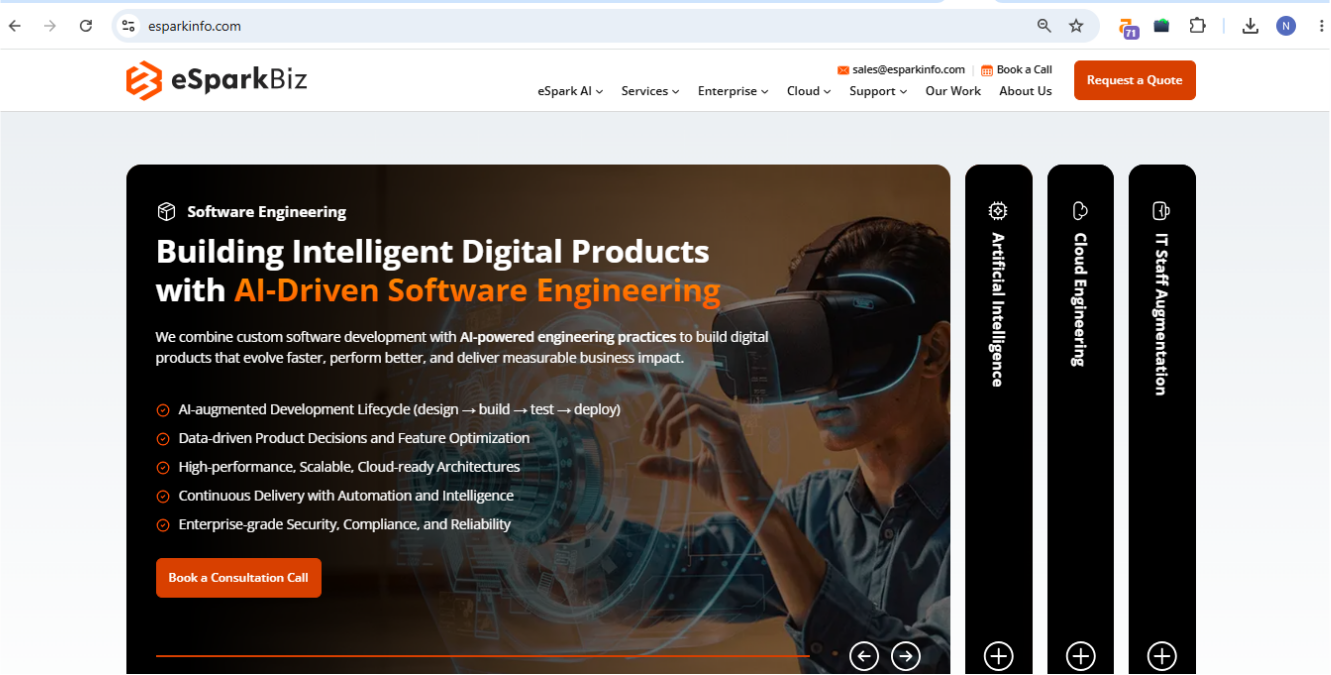
eSparkBiz helps businesses turn product ideas into market-ready digital solutions with product strategy, engineering, and AI capabilities under one roof.
With 15+ years of experience and 400+ engineers, the company builds web, mobile, SaaS, and AI-powered products for startups, SMBs, and enterprises while keeping teams flexible and delivery-focused.
- End-to-end product development
- Product discovery and MVP development
- Web, mobile, and SaaS product engineering
- AI, cloud, and application modernization
Best for end-to-end product journeys; companies seeking only freelance developers may find simpler options.
4. ScienceSoft
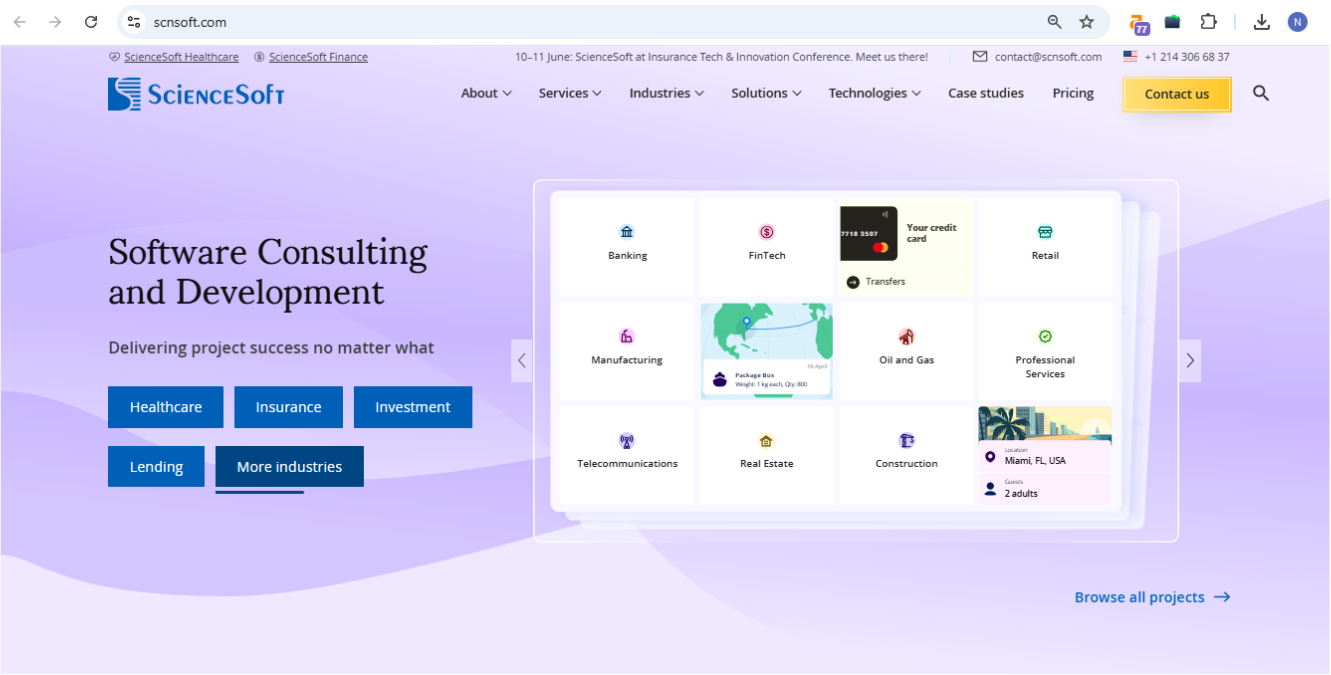
ScienceSoft specialises in products where compliance is half the problem — healthcare, finance, and other regulated sectors.
Operating since 1989, the firm pairs product builds with the documentation, security controls, and audit-readiness that regulated buyers need. That makes it a strong pick among new product development companies for HIPAA- or SOC 2-bound products.
- Healthcare and fintech product development
- Compliance-driven engineering
- Custom enterprise software
- Cybersecurity assessment
Best for regulated builds; teams seeking a design-led consumer product may prefer a studio with stronger UX emphasis.
5. Netguru
Netguru is the design-led choice — a European product development agency known for products where user experience is the differentiator.
Their designers and engineers work as one unit, and their fintech and retail portfolios show it: polished, conversion-aware interfaces backed by competent engineering. They're also comfortable with product strategy work for founders still shaping the idea.
- Product design and UX research
- Web and mobile product development
- Fintech and retail builds
- Product strategy workshops
Pick Netguru when design quality drives your product's success; heavy backend-only platforms aren't their sweet spot.
6. Vention
Vention builds dedicated product teams for funded startups that need to scale engineering fast without diluting quality.
The model is team extension at product-company standards: senior engineers assembled in weeks, embedded in your process, working your roadmap. For Series A–C companies racing a funding clock, that speed is the product.
- Dedicated product engineering teams
- Startup-stage acceleration
- Web, mobile, and cloud engineering
- AI and data engineering support
Choose Vention to scale an existing product organisation; first-time founders without internal product leadership will need more guidance than the model assumes.
7. Glorium Technologies

Glorium Technologies focuses narrowly — healthcare and real estate products — and that focus shows in domain fluency.
With 100+ products delivered, Glorium is a sensible shortlist entry for founders in its two verticals, offering both product development and the regulatory navigation those industries demand.
- Healthcare product engineering
- Real estate and proptech builds
- MVP to full product delivery
- Regulatory compliance support
Inside its verticals, strong; outside them, generalist firms offer broader pattern exposure.
8. Apadmi

Apadmi is the mobile-first specialist on this list — a UK product development firm behind apps for major retail and media brands.
Where Apadmi stands out is complex mobile work: heavy integrations, loyalty platforms, and products serving millions of sessions. For mobile-centred products with enterprise backends, they're among the strongest in Europe.
- Native and cross-platform mobile development
- Complex system integrations
- Digital product strategy
- Product optimisation and growth
Best when mobile is the product; web-first platforms may find better-matched partners.
9. DevSquad
DevSquad packages product development for SaaS founders: fixed teams, product-market-fit focus, and a process built around shipping an MVP that can actually be sold.
The pitch is anti-bloat — small senior squads, no junior padding, business outcomes over billable hours. That's attractive for bootstrapped and seed-stage SaaS in particular, including teams that want to outsource product development end to end without managing engineers directly.
- SaaS MVP development
- Product strategy and validation
- Full-stack engineering squads
- Post-launch iteration
Strong for SaaS at the early stage; enterprises with procurement processes will find the model too lightweight.
10. Intellectsoft
Intellectsoft rounds out the list with enterprise mobility and digital products for asset-heavy industries — construction, healthcare, hospitality.
The firm pairs product engineering with emerging-tech experience (AR, IoT, blockchain where it's genuinely useful), and its enterprise client list signals comfort with complex stakeholder environments and outsourced product development companies evaluations.
- Enterprise mobile products
- IoT and connected-platform development
- Digital transformation builds
- Dedicated team engagements
A solid enterprise pick; consumer-product founders will find leaner options higher on this list.
How to Choose the Right Product Development Partner
Ten capable companies, one decision. These criteria do the sorting:
- Product discovery capability: A partner who starts coding in week one is a contractor, not a product partner. Discovery should challenge your assumptions before it confirms them.
- Stack and stage fit: Match their proven stack to your product and their typical client stage to yours — enterprise process suffocates startups, and startup pace terrifies compliance teams.
- Scalability planning: Ask how the architecture handles 10x users. The answer reveals whether they build demos or products.
- Communication rhythm: Time-zone overlap, demo cadence, and a named product owner on their side. Misaligned rhythms sink more builds than bad code, especially in custom software development engagements that run for quarters.
- Post-launch support: Products earn revenue after launch. Confirm the support model, response SLAs, and handover documentation before signing.
- Honest pushback: The best product development companies will argue with your roadmap. Cheaper to hear it now than to ship it wrong.
Let's Wrap This Up!
Picking wrong here doesn't just cost the build budget — it costs the market window the build was meant to capture. That's the real stake.
The good news: every company on this list is competent, and they're competent at different things. Enterprise re-platforming, design-led consumer apps, regulated healthcare builds, scrappy SaaS MVPs — each has a best-fit partner above. The decision isn't "who's best." It's "who's best for this product, at this stage, with this constraint."
If you're building a SaaS platform, an AI-powered product, or modernizing an existing system into something that scales, Classic Informatics can take it from discovery to production with the same team — and stay around for what comes after launch.

FAQS

Frequently Asked Questions
A product development company takes a product from idea to market: discovery and validation, UX design, architecture, engineering, testing, launch, and post-launch iteration. The best product development company for your situation handles the full cycle, reducing the handoff risk that comes with assembling separate design, build, and QA vendors.